Category: Stories

  • The Unconventional Wedlock of Pradyumna and Mayawati

    The Unconventional Wedlock of Pradyumna and Mayawati

    When one flips through the pages of legendary scriptures, one stumbles upon many tales that portray rather offbeat perceptions of love and a different course of relationships. One such story is of Krishna’s son Pradyumna and his marriage to Mayawati. To understand this story, we have to revisit the creation of Kama Dev, the God of Love, lust and pleasure, and his other half, Rati.

    When Pradyumna and Mayawati were Kama Dev and Rati

    Kama Dev was created by the mind of Lord Brahma, with a purpose to form a cultivated society. To lay a foundation of love. If you look at mythological love stories from Indian History, you realise that back then, gender equality wasn’t an issue and love wasn’t taboo, so a goddess with similar traits named Rati was also created.

    It is often wondered why did Goddess Rati fall in love with Kamadeva? Well, because Brahma created them with all the essentials to create an epitome of love and ideal union. Attractive in looks, enhanced them with shringar, indulging in lust and playful games, oozing sensuality in their behaviour, they touched upon some of the cornerstones of a fulfilling relationship.

    These traits are also reflected in their choices – spring is their favourite season, colourful birds like the parrot and peacock their chosen vehicles, and last but not the least, a shared vision to work toward common goals. For example, when Brahma assigned them the task of dissuading Lord Shiva from an ascetic’s life and persuade him to descend from the Himalayas to marry Parvati, they set out to do so together.

    Kama Dev and Rati teamed up with Vasant Ritu – the spring season when nature blooms with colours, fragrances and pleasantness that influences the human mind and body and causes a release of hormones that increase the craving for love and mating. Under these circumstances, they tactfully lured Shiva away from the Himalayas and toward Goddess Parvati. As Shankar, Shiva married Parvati and started a family to give a worthy progeny to the society.

    Then, why did Lord Shiva kill Kamdev? For he was oblivious that all of this was Kama’s plot, and when he learnt the truth, Shiva burnt him to ashes. Rati, then, laments and approaches all the Devas and Goddesses to bring back her beloved. They empathize with her and are moved by her grief, and promise a reunion of the two. Thus, Kama and Rati become the epitome of a perfect couple sharing similar traits, likes and dislikes.

    Pradyumna and Mayawati – A Nonconformist Tale of Love

    The story of Pradyumna and Mayawati, during the Dwapar Yug, is among the love stories from Hindu literature that raise a lot of eyebrows and often leave people feeling unsettled.

    During this era, Kama Dev descended on earth in human form as Pradyumna – The Son of Sri Krishna. Rati incarnates as Mayawati, wife of Asura Sambara. Within a few days of Krishna’s son Pradyumna’s birth, Asura Sambara abducts the infant and throws him into the ocean because he has been told that Krishna and Rukmani’s offspring would be his annihilator.

    Pradyumna gets a new lease of life…
    Pradyumna gets a new life
    Pradyumna gets a new life Image Source

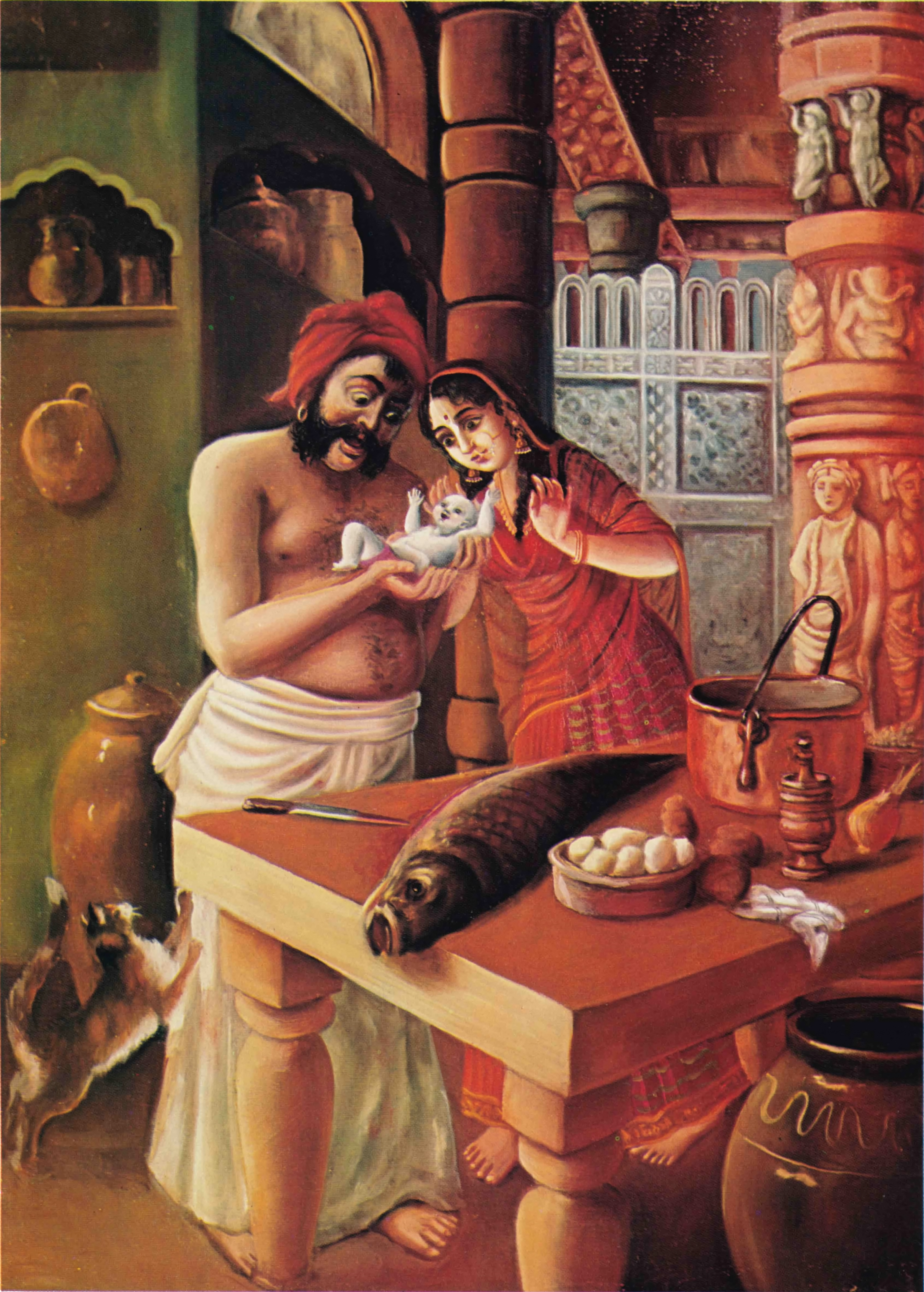
    But Pradyuman is swallowed by a big fish, which is then caught by fishermen and transported to Asura Sambara’s house for a feast. When Mayawati cuts open the fish, she finds an infant inside who is still alive. She feels instantly drawn to him. The child’s innocent face immediately strikes a bond with her. Unaware of his whereabouts, she takes him under her protection and decides to raise him.

    She succeeds in convincing Sambara to let the child stay, for he is just a harmless, lost infant. Her instant, strong affinity towards the child is incomprehensible even to herself. She shuns the assistance of the maids and raises him on her own with qualities of a worthy Kshatriya. Along with the warfare skills, she teaches him magical powers learnt from Asura Sambara.

    A sexual attraction takes hold

    Years pass, Pradyumna grows up into a handsome lad. He bears a striking resemblance to God Kama, with a chiselled body, defined features and an undeniable charm. Quite often, Mayawati experiences a desirable attraction towards him, not suited to a mother figure. She experiences a strong urge to be around him all the time.

    Perplexed with her own emotions, one day, she is lost in her thoughts when Narad Muni, the mythical sage who could travel all the lokas, visits her. He reads her mind, and thus, tells her that the reason behind her unacceptable, disturbing feelings is that in a previous birth she was Goddess Rati, the wife of God Kama, who has incarnated as Pradyumna.

    Learning about the past, her guilt and confusion fade away. She doesn’t suppress her desires and feelings anymore. Her eyes now openly express her love towards Pradyumna, her touch is different now. It’s not motherly but womanly.

    Pradyumna learns his reality

    Pradyumna can sense the change in Mayawati and feels disturbed receiving these subtle messages of desire and love from her. Unable to hold the suspense behind this transformation, he confronts her. She then discloses to him the truth about their previous lives as spouses and the purpose of birth – killing Asura Sambara.

    And thus, Pradyumna sets forth to kill Asura Sambara. Like Rati, Mayawati too supports Pradyuman in his pursuit to end Sambara’s life. A duel rages between Krishna’s Son Pradyumna and the Asura. Prdayumna prevails over the mighty Sambara since he bears both the blood of a Kshatriya and the knowledge of magical powers of the Asuras. Once the Asura is killed, Pradyuman and Mayawati enter into holy matrimony and set out for Dwarka to Lord Krishna and Rukmani.

    A Marriage Frowned Upon
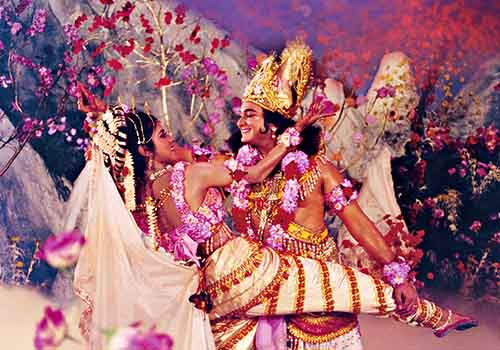
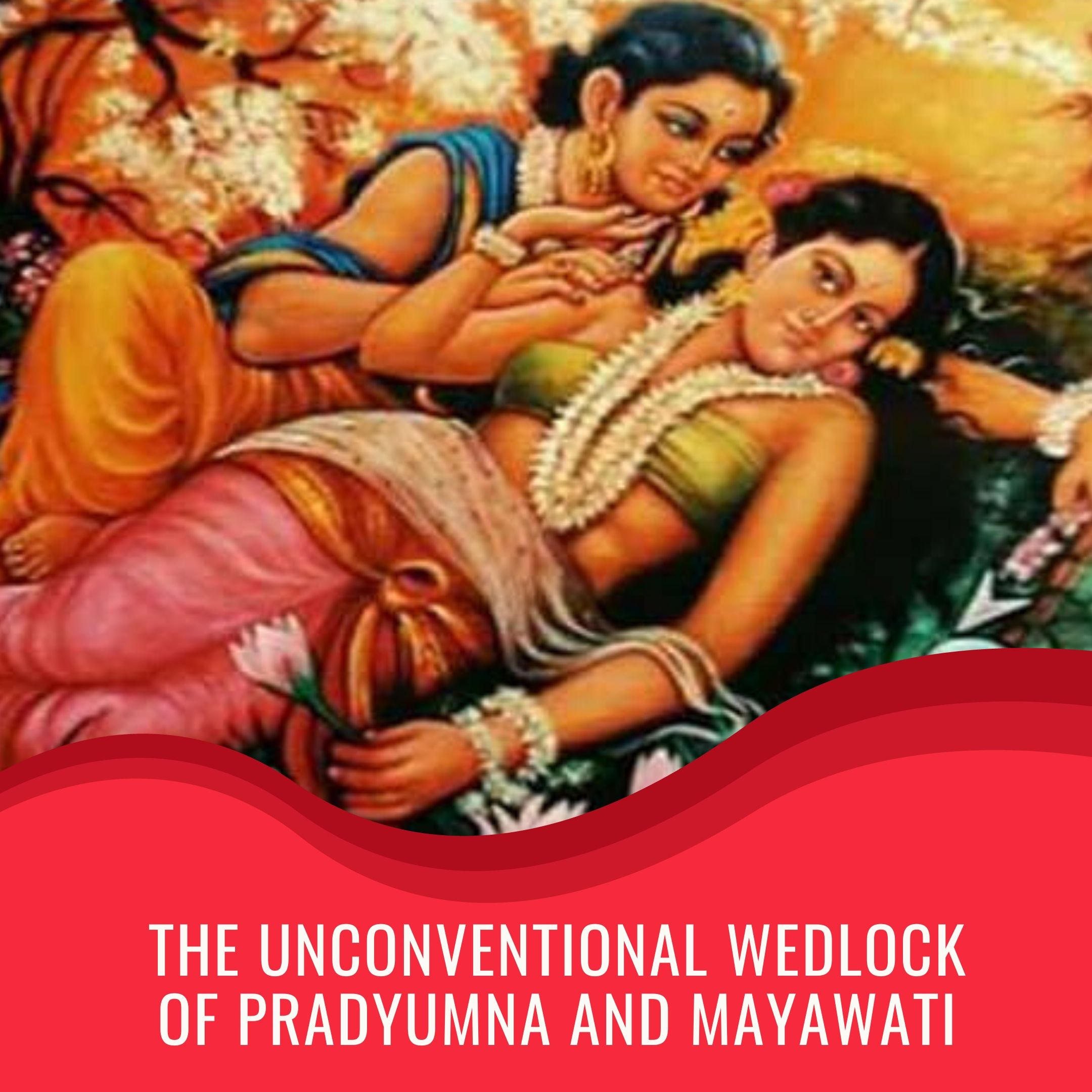
    Pradyumna and Mayawati marriage
    Pradyumna and Mayawati marriage Image Source

    This marriage between Mayawati and Pradyuman raises a storm in the cultured minds of today defined by societal constructs. How can a boy marry the mother figure in his life? How can someone develop romantic feelings for a respected elder?

    Seeing through the lens of mythology, the reason laid is bare – they were destined to do so, and their marriage was plotted by the Devas as part of a bigger plan to bring down an invincible Asura and also to bring Kama Dev back to life so that he could be reunited with Rati once again. If you look at who was Pradyumna in Mahabharata closely, the whole reason for his existence becomes clear.

    Even if one views this unconventional wedlock between Pradymna and Mayawati through the lens of modern psychology and behavioural science, it can be explained that behind the garb of relationships and age barriers there lies a raw, basic instinct of love, lust and attraction. These are flare up when the societal barriers are knocked down.
  • LAKSHMAN’S RETALIATION TO RAM

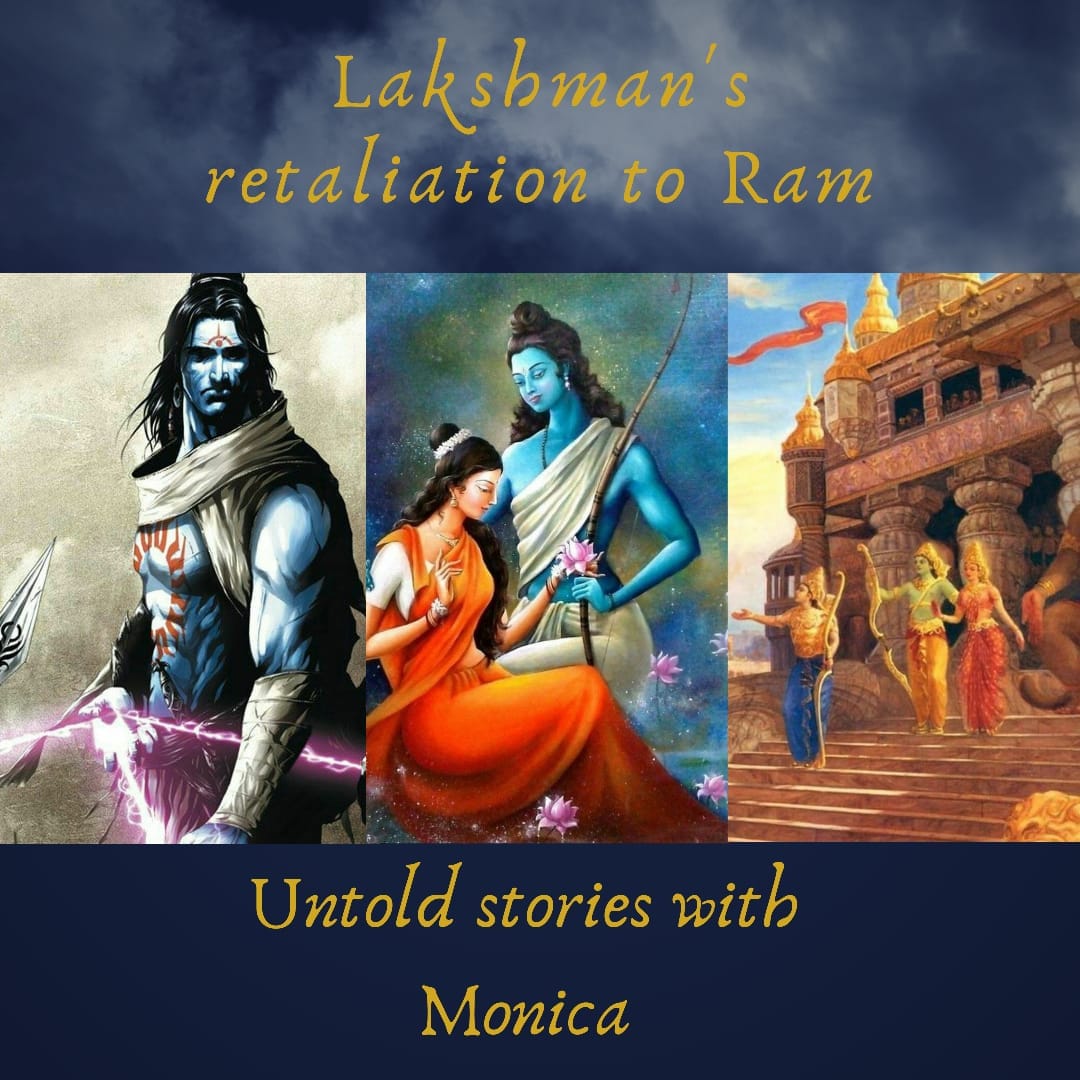
    LAKSHMAN’S RETALIATION TO RAM

    “No! No! By no means will I follow what you say.

    The mighty King of Suryavansh, Sri Ram is giving into the talks of the gossipmongers!! How can you even think of abandoning Sita Mata? She is as chaste as this Earth, as this universe. Everyone has seen her go through the Agnipariksha. You still want to do this to her, to abandon her! No bhaiya! You may kill me for my disobedience, but I shall not give in to this cruel act,” Lakshman retaliated, as Ram ordered him to take Sita away from the palace and drop her in the forest. Not receiving any reaction from Ram, Lakshman continued, “Bhaiya, it was you, the progressive personality, who reformed Ahilya. She was punished by her husband, made an outcast by the society, turned into a stone as if dead, for a crime she didn’t even commit. She just fell into Indra’s trap. Only you were able to see her innocence and it was you who resurrected her from a stone to a living being, rehabilitating her into the society. It was your unbiased perception, who saw Shabri, the untouchable tribal woman, beyond her caste and creed. By accepting her hospitality, you set an example to the world that caste or birth do not define a person. It was you who bestowed the honour upon Mandodari, the wife of demon Ravana, and saved her from the impending ostracization from the society after Ravana’s death. You saw her as a deserving and faithful wife and a righteous queen. And now, when it comes to your wife, Mata Sita, why have you suddenly become so cold and weak?”


    Receiving only Ram’s back and silence, Lakshman flung his hands in frustration. He pleaded again, “Think again Bhaiya! Take back your words. Change your decision. Sita Mata doesn’t deserve this. After an exile of 14years, when she is finally able to adorn herself as the queen, you are taking it away from her. Why! Why are you doing this to her? To yourself? Why so much pain? Ayodhya will never be called just for its judgements if she is sent away. This action will become a blotch on Raghu Vansh’s history. Don’t do this!”


    With a deep sigh, Ram replied to Lakshman, “I know Lakshman, this decision will always be a subject of ridicule for eons to come. It will always raise a finger on me as a husband. But there is no other way to save my dear wife from the havoc these travelling stories will have on her, even if she stays adorned and safe here. I know her, and I also know how crowds behave and operate. By sending her, I will take away a comfortable life, but will save her honour. It will save her from everyday torture she will go through with these hush-hush words and scanning eyes of the crowd. I am also confident of Sita’s strength, and that, she can stand alone and make a life for herself anywhere even when I am not beside her. She is divine and powerful beyond means. Do as I say Lakshman. Take her away before I collapse to my heart’s weakness.”


    Tears rolled down Lakshman’s eyes, as he spat with anger, “What good is it to build an empire, be the scion of Sun god when we do not even have power to save our own? Why are we so vulnerable to these talks of ordinary people? An innocent, chaste person is being banished because the Janta’s heads are filled with cooked up stories and pollution of hackneyed beliefs. It is a shameful act bhaiya! Do you know how Mata Sita will feel? How much she will suffer? It’s a lifelong punishment for no crime. She stood by you. And now, you are withdrawing when she needs you. I do not understand you, Shri Ram!”


    Choking with words, Ram spoke, sealing Lakshman’s plea and anger.
    “I know my Sita as she knows me. I will always be looked down upon as a husband. But my Sita knows the purpose behind my birth. I wasn’t given a choice. I was sent to this Earth with a purpose to become Maryada Purshottam, and this is one of the prices I am paying to be so.”
    Like all the people in the world, Ram’s explanation didn’t convince Lakshman. With drooping head and slouching shoulders, he simply walked away to follow the orders and fulfil his duty of serving Shri Ram.

  • BUDDHA MEETS GAUTAM SIDDHARTHA

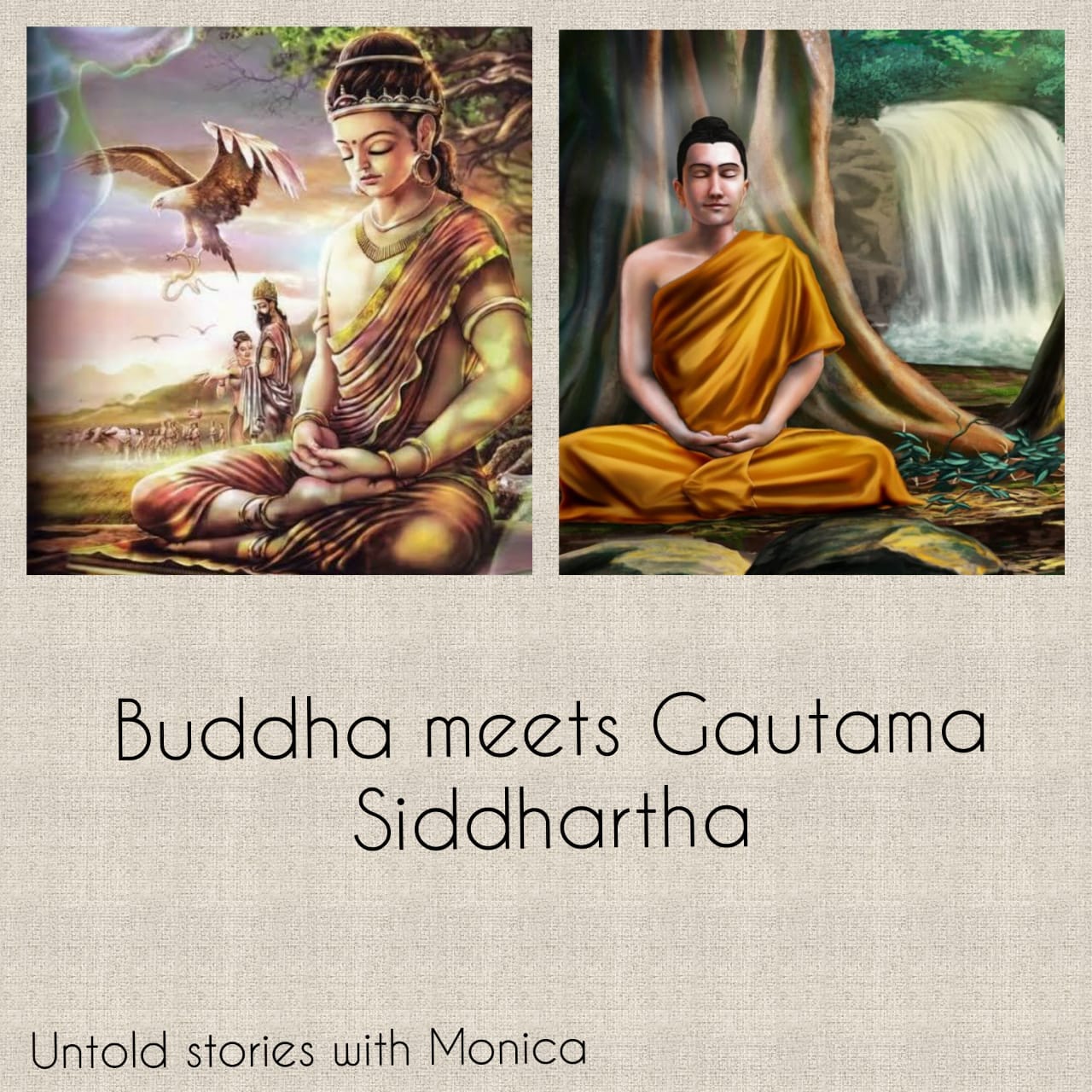
    BUDDHA MEETS GAUTAM SIDDHARTHA

    The gurgling sound of the river called for Buddha’s attention as he strolled in the forest. He looked into the crystal clear water of the river. To his surprise, the water bore a reflection of Gautama Siddhartha and not Buddha. Adorned in fineries, bearing a delightful smile, the innocent eyes with a fidgeting body language. He ran his hand, to clear the illusion, but the reflection stayed. Buddha was seeing his earlier self, before his moment of awakening and titled as Buddha. He smiled at the reflection as Siddhartha struck a conversation.


    “We are one person, but two personalities now. Don’t you find it strange, Buddha?” nudged Siddhartha.


    Thinking deep, Buddha nodded with a yes. He noticed the vibrancies of his youth, curiosity and the twinkle of ignorance in his eyes. Looking at Siddhartha attentively, Buddha inquired, “Do you recall, how did this transience of Siddhartha to Buddha occur and how you felt during that time?” Siddhartha reflected, “My accidental encounter with the four sights; an old man, a sick woman, a corpse and a monk brought a harsh reality check on life. I was brought up in a palace, where the natural course of human existence wasn’t at my disposal. I was only exposed to the pleasures, youth, good health and beauty. It became my definition of human life. Old age, death, diseases were never seen or experienced by me. Those sights put me face to face with the other unknown realities. And it generated fear in me. For anything that is new and unfamiliar feels like a threat to the existing one. My ignorance on life was revealed. Those sights consumed me. They played before my eyes, day and night. I tried to overcome them by hiding beneath my luxurious life. But I was stirred deeply by those encounters. And that night, when my curiosity was at peak I found the courage to take the leap. To set out on the unknown path, to see, learn and experience the new truths. Hence I left the palace, to explore the other side of Life.”


    Buddha probed further,
    “It must have been difficult. From a protective, pleasurable life at palace to a life without any of it. How did you manage to continue practicing the rigorous penance? What was your driving force?”
    Displaying his youthful exuberance Siddhartha answered,
    “Yes, it was difficult. Very difficult. The initial phase of unlearning specially. From a habitual life of luxury, to a life of self-dependency was challenging. But I was always the spirited one. My quest to indulge and consume these new experiences was equally strong. I absorbed every truth of human existence. I experienced them with first hand encounter. I put myself through them. After doing it for years, after seeing the strength and vulnerabilities of living beings, my moment of awakening happened. I felt liberated. And thus you, Buddha was born. Right?”
    Buddha nodded with a “Yes!” This time Siddhartha asked Buddha curiously,
    “What was most important learning in entire course of the journey that you undertook?”


    Buddha replied, “The most important lesson was that of the stages of learning. The stages that lead to liberation and enlightenment. The stages of acknowledgment, learning, analysis and acceptance. Acknowledging one’s own emotions and needs, whether good or bad. Followed by learning, through search and practice. Then comes analysis, gathering the answers of how, why, what and who? And lastly having seen and been through everything comes the stage of acceptance. Acceptance of one’s self and of the universe one is connected to. And most importantly, to be truly awakened to life, one must go through these stages.”
    Siddhartha was intrigued, he asked further, “And what did you learn in the end? What’s the best way to lead a good, peaceful life?”


    Buddha replied with radiance of wisdom.
    “It’s the path of balance. To find that path, one must explore and understand both, birth and death, light and dark, pain and pleasure, hurt and healing. For all come together as one to sum up as life. To attain moksha, symbolic of being unaffected by the external world, to reach an absolute calm within. One must accepts the faces and phases of good or bad with a similar spirit. In doing so, one is able to break the cycle of sorrow and joy, of hurt and healing, of making and breaking, of attaining moksha, the absolute state of being, in sync with the universe.”
    After having an enriching conversation, Siddhartha and Buddha exchanged a similar glance of fulfilment as the reflection in the river submerged into the ripples.

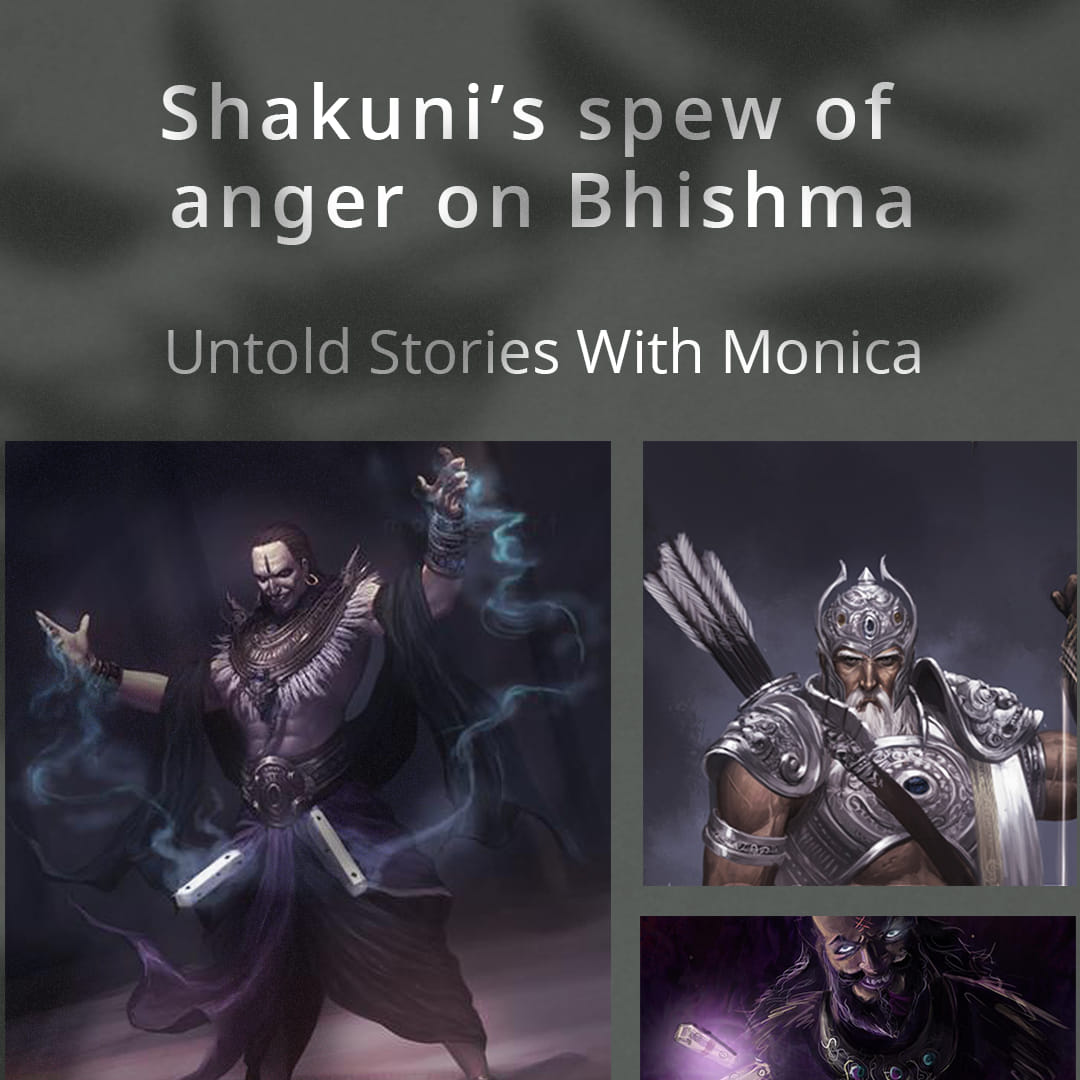
  • Shakuni’s spew of anger on Bhishma

    Shakuni’s spew of anger on Bhishma

    Shakuni circled around Bhishma at a slow pace. Bhishma lay almost lifeless on his death bed of arrows. Without any tinge of mercy or pity in his heart, Shakuni grinned victoriously, while looking deep into Bhishma’s half-open eyes.

    “Your eyes look tired, Pitamaha. Let me help you visualise the war scenario. The Kuru flag is unable to furl in the winds. It’s drooping and may soon fall off the pole. And you know what that means? It means my vengeance will be soon avenged,” Shakuni taunted.

    “Why do you hate Hastinapur so much? Your sister is the queen of the empire. Your favourite nephew, Duryodhan, the King. You seem to be celebrating this defeat, why?”  Bhishma asked gruffly.

    Shakuni snorted with a laugh,

    “Do you recall, Bhishma, the days when you usurped lands, my land, Gandhar, under the pretext of establishing Dharma there? Manifesting your greed to spread the territories of Hastinapur. Do you recall how my family died of hunger in prison? No, you don’t. For you weren’t there to see it. Every single grain of rice that was served to my near and dear ones, they fed me. So I could live and fight back when the winds were favourable. The insult you inflicted on my loving sister, Gandhari. You left no choice for my father, but to hand over his beautiful daughter to a blind man. You used your power to win girls for the kings of Hastinapur. My loving sister’s life became miserable with darkness beside a handicapped man. And who is responsible for all this? You, Yes you Pitamaha!”

    Disturbed by the recall of past, Bhishma shook his head in distress. As if accepting the flaws of his decisions and actions, he pleaded,

    “If you see me as your culprit, why punish Hastinapur? You could have killed me or brought me down? Why such a major plotting against the entire Kuru clan?”

    Shakuni laughed,

    “Who are you and what are you if not Hastinapur? What identity you built for yourself other than this kingdom. Hastinapur is nothing but a personification of you. It is a manifestation of your thoughts and actions. Though you vowed not to sit on the throne, you didn’t allow anyone to grow on it. You ruled everyone’s life in Hastinapur. You were so blinded with love for it that you assumed it was solely upon you to see the empire flourish. To extend its boundaries you killed kings, you abducted girls to serve to Kuru handicapped heirs to carry forward their lineage. So my choice to bring down the Kuru vansh is reasonable, isn’t it? Because to bring about Hastinapur’s doom is to bring down the supreme Devavrata, the indelible Bhishma!”

    “And to do so, you used your sister and her off springs. Do you feel no guilt as a maternal uncle? For poisoning the tender heart of Duryodhan ever since his birth,” mocked Bhishma.

    “Guilty? It’s not guilt but pride that I feel. If history will write you as Bhishma for the oath of celibacy you practiced, it will write me as the most crafted and intelligent man. The personification of Dwapar Yug. You used your arms and manpower to uphold Hastinapur and justified your actions in the name of Dharma. I used my cult practices, my political craftsmanship, my devious planning to bring down who erred me and my loved ones. History will show that the weak can rise. If not arms and power, there is much driving force in the revenge, fueled by the mind. And as per the guilt factor? It’s my love for my sister that kept the fire kindled. Every time I saw her blindfold beside a blind man, my blood boiled and mind ignited with anger. As per Duryodhan, I do feel sorry. But I needed a pawn, and I chose him.”

    Wiping the tears from Bhishma’s eyes, Shakuni whispered,

    “Lie on these arrows, Pitamaha, and ponder – was it me who crafted this war or was it you, your blinded love for Hastinapur that led to it? Was it the repercussions of your actions based on excessive greed for Hastinapur’s prosperity?”

    Shakuni spewed his anger and walked away, and Bhishma was left experiencing more pain from arrows of guilt left by him than the arrows that lay under him.

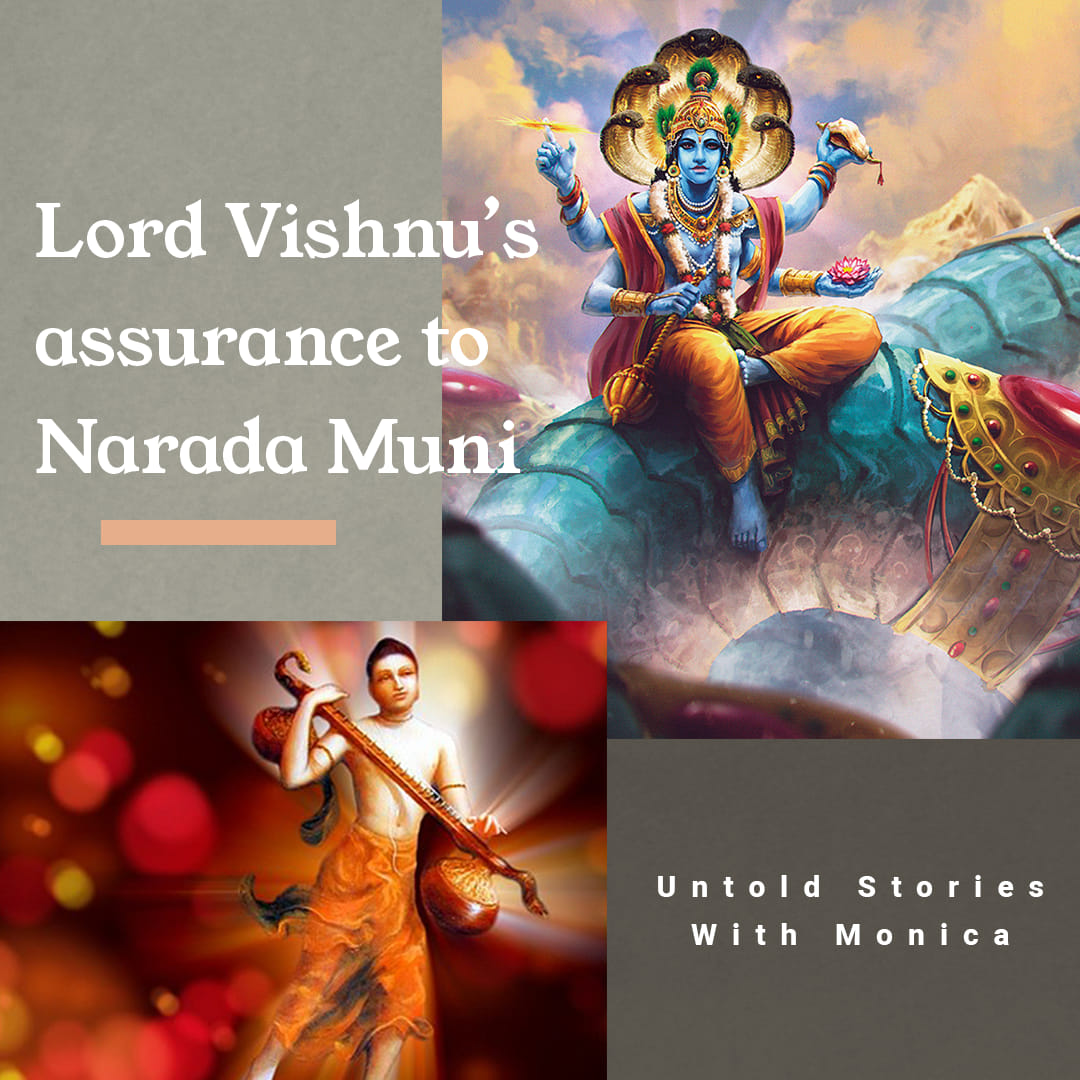
  • Lord Vishnu’s reassurance to Narada Muni

    Lord Vishnu’s reassurance to Narada Muni

    “Narayana! Narayana!”

    Hearing the words and recognizing the speaker, Lord Vishnu’s faint smile broke into a grin as he lay rested in Vaikunth. Narad Muni walked in and paid his reverence. Knowing of Narad muni’s notorious nature, Vishnu used his divine power to peep into his mind to know of the purpose behind his visit. After having received an insight, Vishnu placated and pampered him with his words,

    “You look restless and disturbed, Narad. Who has dared to bother my most favourite devotee?”

    Hearing the phrase, ‘most favourite’ brought a spark in Narada’s eyes.

    “You are calling me your favourite devotee! Look below, all over the Earth, humans are building Hanuman’s temples. Every temple of yours is complete when his statue is placed near your feet. They are calling him, “The Parm Bhakta”. No one remembers me! They don’t see that I recite your name, Narayana, with every breath. They are calling Hanuman your most loving Bhakta!” He shrugged his head in dismissal.

    Lord Vishnu was moved by his words. He could sense his baseless insecurities. He was used to such instances when his devotees got into similar comparisons among themselves. He loved them all equally and knew the art to tackle their temporarily affected state of mind.

    Lord Vishnu eased him,

    “Yes! You certainly are my loving, favourite devotee Narada. But so is Hanuman. Isn’t this comparison like cheese and chalk? Tell me, the wise one. Everyone who recites my name with reverence shares the same place in my heart, there aren’t any pedestals there, my dear.”

    “Yes! It may be, my Lord. But why aren’t I so glorified as Hanuman on Earth?” sulked Narada.

    Laughing at the childlike behaviour of Narada, Vishnu reasoned,

    “This is because while I incarnated as Ram with a purpose to establish the new Dharma, I needed people to support me in that cause. I was born as a human, hence I wasn’t self-sufficient. When I was roaming like a nomadic in the forest in search of Sita, Hanuman came forth and guided me. He utilized his superpowers to support a worthy cause. He used his network of Vanar community to build an army to bring down the mighty Asura, Ravana. His courageous choice

    of actions had to be glorified, to exemplify the strength in unity, and how one must use his talents and power for a higher cause. Also, the new Yug had to be presented with new personality traits for the formation of a wholesome society.”

    Forgetting his insecurities for a while, Narada prompted,

    “And what were they?”

    Vishnu continued,

    “Hanuman was a personification of the extraordinary quality of inner-self-restrain. It reflected in his practice of Bal Brahmachari, attained with the practice of meditation. Despite being a supreme power himself, Hanuman was the most humble and modest person. His selflessness had to be showcased. He never expected any returns or glorifications for his favours and work. He simply chose to be with me forever, to be my backbone, to be the land underneath my feet. That’s humbleness and selflessness. These traits of his had to be exemplified so that humans would imbibe them.”

    Vishnu’s words evoked feelings of respect for Hanuman in Narada’s heart.

    “Hanuman is indeed godly in doing so and being so!” Praised Narada.

    “And so are you my dear!” added Vishnu.

    “Hanuman guided me while I was on Earth. And you when I was in Vaikunth, as a Trimurthi, as the sustainer of life. You roamed around in the Triloaks (three worlds) repeating my name, “Narayana, Narayana”. If not that, how would my popularity become a reality among Devas, Asuras, Manav (human) and every other living entity. You travelled along with my stories everywhere, sang songs of me, and repeated my name before all. Thus making me famous and establishing me as the Palanhaar of the universe. If not by you, who would know Narayana, the Vishnu, the Preserver, my dear? Coming to temples, they are structures built to keep humanity reminded of its human duties and follow the right path to perform their Karma. You reside in my heart Narada, that’s your temple. Everyone who bows before me, bows before you as well, Munivar.”

    Vishnu’s words assured Narada of his position and glory. He clicked on his Khartal (musical instrument) and struck the strings of his Tanpura and resumed on his journey merrily singing and reciting, “Narayana! Narayana!”

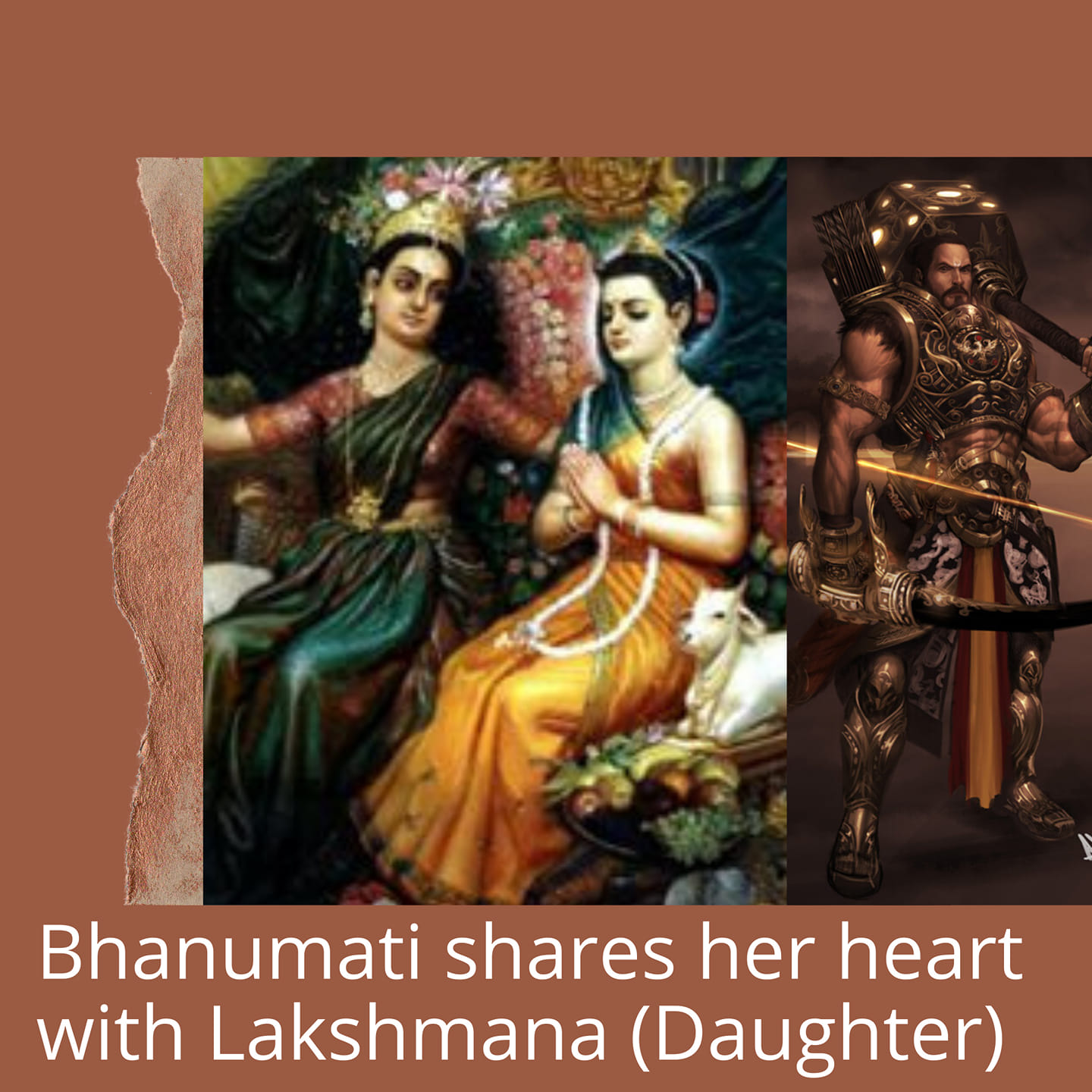
  • Bhanumati shares her heart with Lakshmana (Daughter)

    Bhanumati shares her heart with Lakshmana (Daughter)

    From the squint of her eye, Bhanumati could see through Lakshmana’s heart. She bore much resemblance to her father, Duryodhan. Just like him, her gait spoke of her emotional state. Holding her wrist, and running a loving palm on her cheeks, she asked,

    “What thought is keeping my daughter so occupied that she doesn’t even see her mother in the chamber?”

    Lakshmana’s eyes ran over Bhanumati’s face. Devoid of adorations, pristine and white. She lowered her eyes, feeling the pang of the void that the death of her father had left in their heart.

    “Maa! Life has been very difficult for you and it still is.” empathized Lakshmana.

    Faking a smile Bhanumati asked,

    “What makes you say that?”

    “Maa, the world saw my father, Duryodhan, as a villain. The history of Hastinapur and Mahabharata writes him as an antagonist, adharmic. His death is grieved less and more joyed. It must have affected you, right?”

    “Yes, it did! It did for a while. It affected the queen of Hastinapur, not his wife. He was an Adharmi in the eyes of the moralists. He was a villain in the eyes of his enemies. He was an antagonist for those with whom his ideologies were in a clash. History writes him only through the ink of his political career, his defeat and his misdeeds.”

    “And how do you see him, mother?” Lakshmana prompted.

    “I see him through the eyes of a wife. He was the most loving man. A man with tough shoulders and a soft heart. When he had forcefully abducted me from the Swayambar, I was furious and hated him to the core. But when he politely bared his heart, expressing his love for me at first sight, when he had reasoned that my abduction was the only resort left to him and that he didn’t want to lose me to anyone, I was able to see his intentions and not judge his actions. He married me only after winning my love. He had wooed me for days, had won my trust and promised to be a one-woman man all life. And he did too. He was a gentleman, true to his love and soul.”

    “You call him a gentleman, even though he called Mata Draupadi names and mistreated her publicly in vulgar ways?”

    “Yes, I was angry, very angry. I had lashed at him for doing this to a woman. My blood had boiled. But he had sternly reasoned that it was a political move, an act of vengeance against her mocking and bullying him, calling him a blind man’s son. A repercussion Draupadi faced for using her tongue loosely.”

    Bhanumati continued,

    “Lakshmana, however, the history might portray him, but to me, his wife, he will always be a hero, the victorious king of my heart. Although the world saw him as an egoist, I knew that his ego was a defense against the unfair world. Also, your father was merely a pawn in the hands of his maternal uncle Shakuni, who harbored grievances against Hastinapur and Pitamaha Bhishma and used your father to seek his revenge.”

    “Didn’t his short temper or reactive nature ever scare you and keep you edgy?” intrigued Lakshmana.

    “Initially it did. When I saw him behave like that with others, it feared me. But as years passed, I realized my fears were irrelevant. For he was never that to me or to the people he loved. I recall this incident. Once he was away at war for a few days. He had asked Karan to keep me company and take care of me. I and Karna were lost in playing a game of dice, I was on the losing side. So I was irritated and got up to leave for quits. But Karan grabbed my wrist to stop, asking to complete the game. In doing so my long pearl necklace, entangled in his hand and it broke, scattering the beads all over. At that instant, your father entered. I and Karna were taken aback. We felt Duryodhan may misunderstand and misjudge us. But to our surprise, he picked up all the pearls and joked, “Should I bead them too?” after that incident, my fears were gone. I had a glimpse of his heart that was filled with faith for his wife and his friend.”

    Seeing her father through the eyes of her mother, Lakshmana realized that a man can never be painted in just black or white, that there were reasons to justify his father’s actions. She hugged her mother tight. Her chest bloated with pride for her father. She walked out of her mother’s chamber with a light heart, as silent tears of love trickled down Bhanumati’s eye.

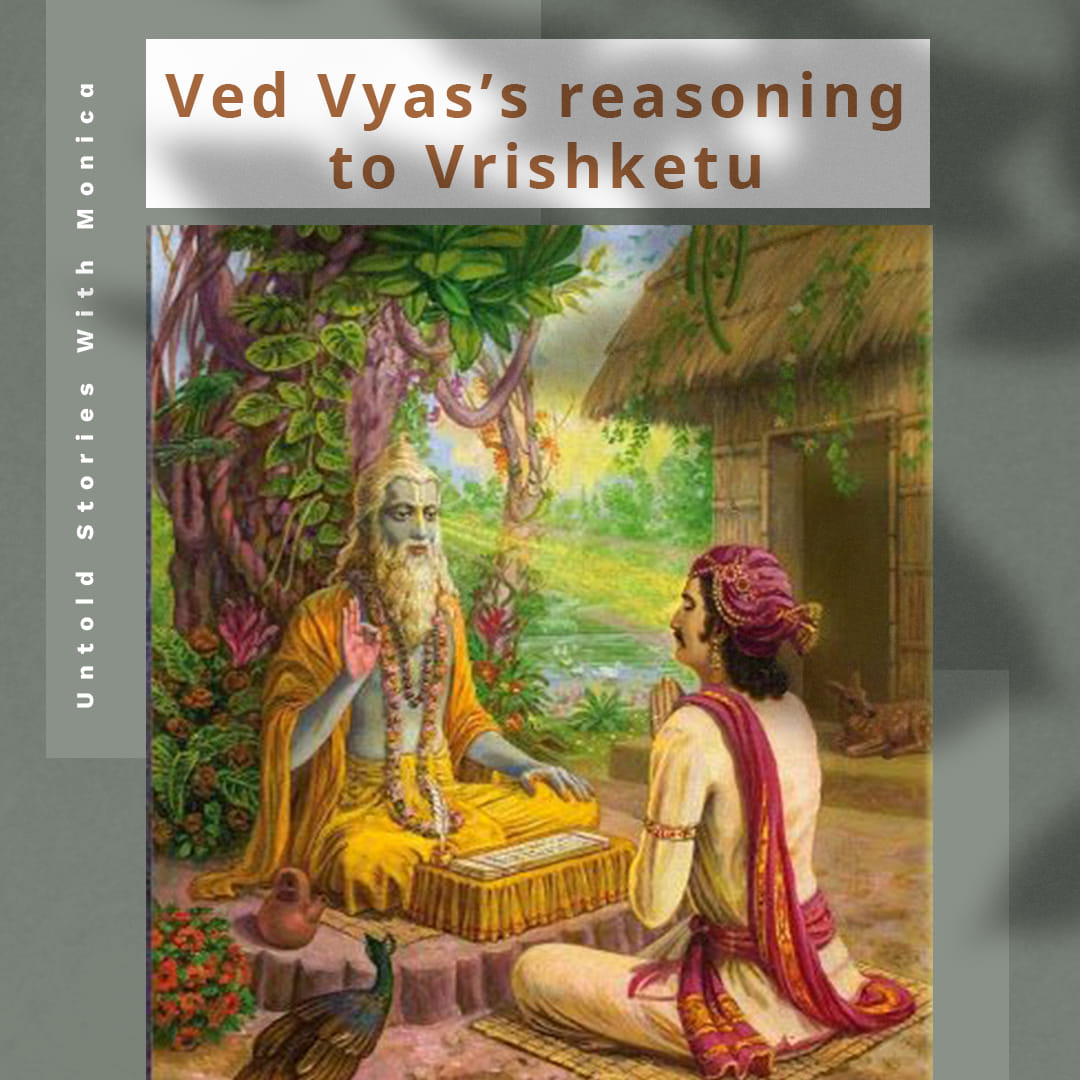
  • VED VYAS’S REASONING TO VRISHKETU

    VED VYAS’S REASONING TO VRISHKETU

    “Pranam, Gurudev!” Vrishketu reverentially bowed before Ved Vyas, the legendary author of the epic Mahabharata.

    “Gurudev, the world is well versed with my father, Karna’s story. Today, I am his only surviving son. I have seen my father and all my brothers killed in the Kurukshetra war. I also saw how my father’s death was brought about. Gurudev! You are an immortal, the witness and the writer of this epic tale of Hastinapur. I seek the light of your wisdom to clear the darkness of confusion that looms over my father’s demise.”

    Ved Vyas raised his hand to bless Vrishketu. As if he could read his mind and preempt the questions that bothered him, he nodded with a faint smile,

    “Ask Vatsa (disciple)… Tell me what confuses you?”

    “I don’t understand why was my father cursed even when his intentions weren’t bad? He hid his identity from Lord Parshuram only in the quest to learn, to gain knowledge. And as we know, the cow was killed by him accidentally, not intentionally. And yet he was cursed with words that eventually led to his defeat and death. Isn’t this unfair and unreasonable? And how can someone’s words be so powerful that they bring down someone’s life, that too, a legend’s life?” Vrishketu asked in anger and sadness.

    After a thoughtful moment, Vyas replied,

    “Putra, there are two paths to reach the answers to your question. One is, the understanding that it was – Karna’s destiny. Destiny always designs the path as per the chosen destination. And to do so, it paws on people and circumstances. Karna sided adharma, he stood by the Kauravas. Pandavas, on the other hand, represented dharma. And as you know, to establish dharma, adharma had to be abolished. Although Karna was a divine child of the Sun God and an outstanding and a skilled archer, he supported adharma. Hence, destiny had to remove him. To do so, it used Lord Parshuram’s and the Brahmin’s curses as its medium. This is one way to understand why things turned against your father. It was destined!”

    “So that means, we mortals are like puppets tied to the hands of Destiny. And what is the second explanation behind his defeat?” asked Vrishketu, listening attentively.

    “The second path to understanding the tragedy of your father is to analyse his personality. Karna’s persona and choices led him to his doom. Ever since his birth, he was unable to build a strong personality. His persona was developed based on others’ perceptions and opinions of him. He was greatly affected and moved by how the society saw him and spoke of him. That’s why he rebelled against everyone – whoever called him a ‘Sut Putra’. He made Arjun his biggest rival for no personal reason, but because he always felt that Arjun was more popular and more loved by all. Resulting in jealousy and envy. He blindly pivoted his life on defeating Arjun to prove himself to the world.”

    “What’s the harm in centring one’s life to one goal?” interrupted Vrishketu.

    “Life is like a wheel. For its smooth momentum, the weight should be evenly distributed. But like Karna, when an individual exerts all the pressure on just one aim, the wheel of his life is bound to get stuck at some given point. Just as it happened during the Kurukshetra war, the wheel of his chariot was stuck in the mud. It symbolised the fact that Karna had put the weight of his entire life to defeat Arjun. Consequently, when the most awaited moment of life arrived, the feeling of overwhelm lead to a blackout. He had eagerly waited for the moment to defeat Arjun. And when it happened, his mind went blank; because after that moment would have passed, Karna’s life would become purposeless.”

    Choked with emotions, Vrishketu asked,

    “And how were his choices responsible for his tragedy, Gurudev?”

    “He always chose to see the darker shades of his life. He hung on to people’s mockery and indulged in self-pity that eventually generated frustration. To explain better, I will draw a parallel example of Krishna. Even Krishna was given away by his parents. His birth was shadowed by death. Although born a prince, he was raised as a cowherd. Even he was accused and mocked often as a Makhan chor, and as a shrewd politician. He didn’t master in any major weapon skills. But unlike Karna, his strength lay in acceptance, in swimming with life’s flow. And that’s what his weapon, Sudarshan Chakkar is symbolic of. The movement of life’s chakkar is the strongest weapon to fight against any challenges. To flow and not resist. Karna’s inability to laugh at life, to accept circumstances, to see the brighter side made him bitter. Unlike Krishna, he was driven by emotions and not objectives. He chose Duryodhan based on emotions, not reasons. And that was a wrong choice.”

    Deeply contemplative, nodding at the insightful reasons cited by Ved Vyas, Vrishketu touched his feet and walked back with much more to ponder upon.

  • Ahilya in a tete-a-tete with her grand-daughter (Draupadi).

    Ahilya in a tete-a-tete with her grand-daughter (Draupadi).

    After having shed her human form and entering the world of souls, Ahilya was relaxing in Swarg Lok. It was a place without the manifestation of time and space.

    “Look! What I got for us, Dadi.”

    Draupadi walked in holding a tray with two glasses of refreshing drinks. She looked at Ahilya with admiring eyes.

    “You are the masterpiece of Lord Brahma. Your beauty is flawless. Your facial features and body, well-shaped and sculpted, so apt to your name, Ahilya. You are certainly the most beautiful woman Earth ever had,” she complimented her grandmother.

    Cupping Durapadi’s chin in her palms, Ahilya praised her,

    “And the tej of your face still makes you the most radiant one. The perfect symbol of fire.”

    Hugging Ahilya, Draupadi continued, in a reflective mood,

    “You know Dadi, though we were born in different yugs, related as cousin grandmother and grandchild, somewhere our journeys were filled with similar challenges. Our destinies subjected us to the same atrocities by society.”

    “And what makes you say that, Draupadi?” Ahilya sounded intrigued.

    “Your character was tainted with infidelity. Your short encounter with Lord Indra led to severe punishment of several years by Maharishi Gautama. He accused you of vanity. You were turned into a stone. You had to practise rigorous penance for purification. You were looked down upon for years. Everyone turned away their eyes from you as if you were invisible. Why didn’t your creator, Lord Brahma, come to your rescue even once? If not that, at least he could have come to hear your heart. To share his part of the fault- of marrying away his most beautiful creation, an innocent girl, to an old ascetic. To acknowledge his failure, to see that this mismatch could lead to such incidents in the future. Even he was at fault for being thoughtless. It was only Ram who could see you as a human. Humans who could falter and be flawed. Only when his feet touched you and when he accepted your hospitality did everyone begin to acknowledge you. Only after he saw you, did you become visible again. Isn’t this a bit too harsh treatment from our loved ones?”

    Draupadi continued as Ahilya listened silently,

    “Similarly, I was married to the Pandavas, became the wife of 5 husbands. A choice I didn’t even make. I was character assassinated various times, by numerous people. Everyone called me names, either aloud or in hushes. They looked down at me. Saw me as an angry fireball. Despite being a wife of 5 yodhas, a daughter in law of magnanimous Kingdom of Hastinapur, before powerful ancestors, I was humiliated, my dignity was raped publicly. And like in your case, who came to my rescue? Krishna! It was Govind, who dared to stand against all. Only he came forward and wrapped a bandage around me. Only he saw me beyond what everyone could and accepted me as a Sakhi (friend). Just like Ram, he saw the human in me. Isn’t it strange Dadi that our loved ones, nearest and dearest ones can’t see us the way strangers can?”

    Heaving a sad sigh, Ahilya replied,

    “Yes, it’s strange. But it’s also a reinforcement of God’s presence. In whatever humanly form.”

    Mata Lakshmi, who was overhearing the conversation outside, walked in. Taking a sip from Ahilya’s glass, she joined in the talk,

    “Shri Ram came and rescued Ahilya, for he had to show the world that forgiving is a Godly act.”

    Then taking her gaze over to Draupadi, Lakshmi continued,

    “Lord Krishna never judged you for being a wife of five husbands and accepted you as a Sakhi. Because in the new Yug, he had to set the norm of gender equality. If men could indulge in polygamy, so could a woman, if needed. He also had to introduce a new relationship. Of that of a friendship between a male and female.”

    Mata Lakshmi’s words, sealed the conversation well. Happily, gulping down the thoughts and drinks, Lakshmi, Ahilya and Draupadi giggled and posed for a selfie together.

  • KARNA’S ARROWS OF QUESTIONS ON KUNTI

    Karna’s Arrows of Questions on Kunti.

    Karna pleaded in a broken and an acidic tone,

    “Tell me Rajmata Kunti, how do you have the right to call yourself my mother? Why should I see you as my Mata? What have you done so far to deserve this title?”

    Kunti collapsed on her knees, for she had no answers to this child’s questions. Although a grown up legendary warrior now, his questions were revealing a toddler….. His oddity was justified….. No words came out of her mouth. Only guilty tears flowed.

    He continued brashly,

    “Even Krishna was born out of Devaki and raised by Yashodhra. Yet he is addressed as Devaki Nandana. You know why? Not only because she held him in her womb for months but also because she let go of him for his safety, and not for her own protection. That is a courageous act, isn’t. But you, Pandu Jananni, were coward to accept me, and more coward to not kill me. Instead of discarding me away in the river, you should have killed me. At least my birth wouldn’t have been shamed. That death would have been better, than this life filled with dilemmas about my belonging and birth.”

    Kunti retorted,

    “YES! YES! I was a coward. I still am one. That is exactly the reason why I come to meet you in hiding even today. I accept your accusations Putra. But please for god sake, please come to me now. I am standing here with open arms to embrace you, ready to face all. I want to announce you as my first born, my eldest son.” Pleaded Kunti.

    “DON’T! PLEASE don’t call me your son. I am Radhey. Radha MA’s son. My heart is filled with memories of her. It was she who ran her fingers on my cheeks to wipe the tears. Those were the hands that ran on my forehead to sooth the creases of tensions. Her delicacies have built these muscles. And above all, those were her prayers which were filled with my name. It makes me wonder Rajmata, how do these tears flow from your eyes? Is your mind conditioned to evoke emotions when it hears the word Mata? Don’t fake it Rajmata. Motherhood isn’t an entitlement. It’s a journey to be lived and felt and above all to be shared. Without knowing the dharma of a mother, without performing any Karma of a mother, you want to be my Mata now. Please call me Karan, that’s my name for outsiders.” Karna shrugged her as a mother.

    “I was a young girl putra. I didn’t have the courage to face the world as a single, unwedded mother. It was my curiosity that led me to test Rishi Durwasa’s divine mantra. That I could summon any God with the Mantra jaap. I didn’t know what to do my child. I am sorry! I am really sorry!” Kunti sobbed.

    Hearing her reasons, Karna mocked,

    “So I am actually a result of an experiment. Right? Isn’t this too harsh to hear Rajmata? And now after years you want the entitlement to the result of that experiment. Standing at the threshold of Kurukshetra war, you suddenly want to accept me as a son. Isn’t this far from truth? Doesn’t this request display your love for your five sons and not me? Why are you here? To accept me as a son…..give me the throne of Indraprastha or to save your sons from being killed by my arrows…. Please go away Rajmata. This Daanvir Karna has nothing to offer you except the rain of his questions.”