Category: Stories

  • AND THE CAMERAS FLASHED.

    AND THE CAMERAS FLASHED.

    My left hand tapped at the alarm clock. Slipping my feet into my purple slippers, I stepped out of the room. In the adjacent room, lights were on, the TV showed a blue screen, Dad was snoring. Looking at the usual vacant bed beside him, my lips drooped into a frown. I switched off the light and shut the doors.  Into the kitchen, I Poured tea into my favorite white porcelain mug and walked to the drawing-room. I stood yet again, mom was sleeping on the couch. I placed the mug on the table without making any noise and gently lifted the sheet to cover her. Being a light sleeper, she woke up. 

    “I overslept! I will pack your lunch.” 

    I stopped her mid-way. 

    “It’s Sunday, mom. I have to deliver one lecture. I will be back at lunchtime. Please sleep.” 

    Nodding, she pulled back the sheet to sleep. 

    Seated opposite to her on the sofa, I sipped the tea, cupping the mug between my palms. Against the grey backdrop of darkness in the room, twilight peered in through the gaps of the curtains. I kept looking at the thin, fragile frame of my mother’s back. Age reflected in her shrunken physique with wrinkled hands. Seeing Mom and Dad sleeping in different rooms, the haunting vision appeared before my eyes. An image of my parents together in one frame, smiling, reflecting love for each other. 

    Ever since my toddler days, I had seen parents of other kids holding hands, sharing a bedroom, laughing and talking. It was a rare sight in my home, in my parent’s life. They slept in different rooms, dined at different times, didn’t watch television together, didn’t visit temples together, not even my school. Their verbal and non-verbal communication was minimal, they rarely fought or argued. Though a couple, they held on to their individuality strongly. Their indifference against each other affected me. I would watch the parents of other kids in awe and in envy. I really longed to see it between mine. I often fantasized, wished and prayed to see my parents in those acts. To see them as one and not two. To make the reality bearable, I created an image in my mind, of my parents smiling, beside each other in unison. I kept his imaginary picture concealed in my heart and mind, my little secret wish. Whenever I read stories of hope and miracles, book like ‘The Secret’ by Rhonda Bayern, their image would appear before my eyes. I hoped and believed, that the imagination will become a reality someday. Eventually, this wish transformed into an eternal vision. 

    On an occasion, I planned a family dinner, just so that I could seat them together. Mom slipped away with an excuse to make hot chappati and also that she was fasting. I insisted her to sit, but she ran a hand on my cheek and retired to the kitchen. Dad didn’t help in my attempt too. Instead, he announced the start of the cricket match on T.V. I sulked through the dinner. Frustrated, I confronted them as to why they do not behave like other couples? Dad got away with it, without a word, throwing his hands in the air as if I was being silly. Mom reassured, they love each other, but didn’t make it a show. She asserted that I was being filmy. Several such attempts failed in future. Every failure weakened my hope, blurred my vision of seeing them in one frame. Time passed. I grew up, but nothing changed. Even my wedding album didn’t have a picture of them together. They were perfect at everything, with everybody, except with each other. My vision kept replaying, haunting me, but now at bigger intervals. 

                                          ********************** 

    20 years later….. 

    I braked the car with a screech outside the hospital entrance. Leaving the keys in the watchman’s hand, I ran towards the elevator. While trying to regain my physical balance, I pressed the elevator button multiple times. Impatient, I began skipping over the steps and reached the fourth floor. 

    “Wait, Madam! You can’t ente…..” 

    I pushed the doorkeeper away and rushed into the Critical Care Unit of the hospital. The ventilators whooshed. The big white hall smelt of antiseptics.  Half-conscious patients lay in bed. My feet felt heavy. My pace slowed. I reached my Dad’s bed. My brother, nurse and doctor looked at me with a sad expression. Clenching my fist around the bed’s rod, I looked at Dad’s face, tongue stuck out from underneath the tube in his mouth, his head fallen on the left. Seeing no numbers, a blank line on the vitals’ display, I retreated to the wall. 

    “What is it? Why no numbers on the display? Why do we have to switch off the ventilator?” I blabbered looking at the doctor. 

    His sorry expression and sympathetic eyes answered my questions, but I failed to accept what was obvious. 

    As my brother’s hand reached out to me, I ran outside. My mind screaming, 

    “He’s dead. HE IS DEAD!” 

    My mother emerged from the elevator. Seeing me with teary, puffy eyes, the flask of tea dropped from her hand. I reached for her, she fell on the floor, tearing my dress. My hands and heart went weak holding so much pain, not just mine but hers as well. In a numb state, I went through the preparations of the last rites. The tears kept running and drying. Many people moved around Dad in a mourning state. Panditji reciting mantras. His body was tied to the bamboo frame, wrapped in a white sheet, covered with flowers, his face bore a serene look. My brothers bent to lift the pyre, as Panditjiannounced it was time for a departure from home. 

    “NO WAIT! WAIT!” my mother stopped everyone. 

    She dragged herself closer to him, placed her hand over his body, and brought her face next to his. 

    “Please click a picture of me with my beloved!” she requested, as she managed to smile. 

    Her words jolted me out of my trance-like state. Lights flashed from the phone cameras. Tears began rolling down and my lips broke into a childlike glee. This miraculous moment had brought my childhood fantasy, my haunting vision, come to life. The law of attraction of the universe had complied. 

  • THE CALL (PART 2) -(Story of Faith)

    THE CALL (PART 2) -(Story of Faith)

    Back in Haridwar, walking on the bridge over the Ganga. White-capped mountains rose in the distance. The river was a gigantic being flowing beneath. Anushri walked a few steps behind me. 

    Things wriggled in the river. I clutched the thick jute ropes and stuck my head out through the loose-knit loops for a closer look. Snakes and crocodiles slithered entwined below the surface. I wondered how they survived in pure, flowing water. 

    The splash that came then was like a whiplash. 

    My head snapped around. The bridge was empty and for one moment, I froze. 

    Anushri was gone! 

    Frantic, I scanned the bridge and the water on both sides. 

    My little sister was gone. 

    “Oh God! Help!” I screamed.

    Falling down on my knees, I squeezed into a ball and burst into loud, crying hiccups. 

    Of a sudden, a voice called out. “Didi! Look Didi! Look!” 

    I couldn’t trust my ears. I looked up and there she was. Anushri, smiling and holding a stranger’s arm. A man in his 40s, radiating calm and assurance. 

    The phone rang again. I didn’t wait for mom to speak. 

    “Who was he?” I asked. 

    “God,” she said. “Appeared out of thin air and vanished into one. As if someone had called out to him from the heart, and he came.” 

    Mere coincidence? Did I call him? Was he God? Does God exist? Was it my prayer? How could I have called a God I didn’t believe in! 

    After hearing the details from mom, I walked out lost in thought and found myself at the chapel. Night had fallen. A candle moved in the darkness, lighting a small path. It was the chapel sister. 

    She ran her soft palm over my head. “A power cut, child,” she said.

    “The chapel has called you though. Take this candle and walk right in.” 

    My newfound faith in the almighty found the certainty it didn’t find in books and logic. 

  • ‘THE CALL’. Part-1 (Based on true incident)

    ‘THE CALL’. Part-1 (Based on true incident)

    “Anu…!” 

    I came awake with a silent scream on my lips. Eyes flashed open. Adrenalin coursed through my veins. 

    My little sister! Anu! 

    Open or shut, my eyes were seeing the same dark night. Someone snored. It took me a moment to realise it was matron in the room next to our dorm. I heaved a sigh of relief. 

    Just a dream! With a trembling hand, I reached for the bottle by my bed. 

    Cold water trickled in, easing the dream out. One of the girls turned over and the sheets rustled. 

    “Anu’s fine,” I told myself. 

    “It was a dream. A bad dream! That’s all it was.” 

    My watch showed 4 a.m. We had a physics test today. The dream was fading already. Switching on my desk lamp, I settled down to revise. Last minute revisions are important. 

    Five hours later, dream forgotten, I was whistling on my walk to the school. 

    “Looks like someone’s well-prepared,” said Sally who struggled as much with physics as with her frizzy hair. Right now, it was an electric halo around her head. She was never put out by my silken straight hair nor my affinity to physics. 

    “It’s a hack to beat nervousness,” I winked. “There’s science behind it.” 

    “We’ve got ten minutes,” she said. “Let’s go to the chapel.” 

    “Chapel?” I asked. “You should be revising now.” 

    “To ask for blessings that we do well in the test,” she said. “Equally important.” 

    “Prep and revision, Sally,” I said. 

    “These get you through the test. Not blessings!” I was sharp, but Sally was a sweet friend who shrugged off life’s troubles easily. 

    “I forget!” She slapped her forehead. “Atheist! Logical, scientific thinking nerd!” 

    During the test, my focus wasn’t fully on the paper. Anushri was on my mind. I had been in the 2nd grade when she was born. When I visited her and mom in the hospital, the first thing I noticed was her tiny nose. 

    Born seven years apart, we had the big sister-little sister thing going. When she’d throw a tantrum for the TV remote, all it took was a warning glance from me and she’d drop it in a sulk. 

    Last night’s dream remained clear in my mind. Hard as I tried to block the disturbing images, they continued to return. 

    Next day, the first bell for breakfast found me knocking on the bathroom door. I shared one with Radhika. No response. She had been in there for a while now. 

    I pressed my ear to the door and heard her muttering. 

    “Are you talking to someone?” I spoke. “You sound like you do.” 

    Radhika slammed the door open. “I dreamt,” her voice trembled. 

    “I dreamt our dormitory had caught fire and everything was burnt.” 

    “It’s just a dream,” I said, holding her wrist. 

    “Not so,” she shook her head. “Dreams come true. But, if you sit on the pot and narrate your dream aloud, the dream won’t come true. I was doing that.” 

    “Really, Radhika! Sitting on the pot and saying your dream aloud? Did you just say that! Dreams don’t come true. Not the ones you have in sleep. They’re just your subconscious manifesting itself. Now, please move! I’m late already!” 

    My dream returned, and I tried to shrug it off. It was just a dream! 

    But, was it? It was a constant presence through the day, during classes and at play. The encyclopaedia, which I could usually rely upon to calm myself didn’t work either. I shut it after a few minutes. Anushri played behind my eyes. 

    What was she doing now? Watching TV, I suppose. I needed to hear mom’s voice, for her to tell me that all was well. 

    In the phone room, I avoided Sister Angie’s eye while I wrote down mom’s number for her. Sister Angie was bone thin and leaned heavily towards moral science and I wasn’t in the mood for it. 

    A senior was on the phone. I sat on the wooden bench, smooth with use, but with the ink and scrapes of a thousand girls who had shown their stress, fear, and happiness on it. 

    The senior leaned against the wall, answering in monosyllables. 

    I began rocking back and forth. I was restless. 

    Finally, the girl put the receiver down. Not a moment later, the phone rang. 

    “Your mother’s call, Mann!” Sister Angie called out cheerfully. “The wireless connection of the divine. Connected before I could dial.” 

    Strange coincidence! Now that I had mom on the phone, my hello was muted. 

    “Mann! Manu. All well with you?” 

    “Yes, mom,” I said. She sounded fine. Maybe a tiny bit breathless, but fine. Anushri must be fine. Not that the dream meant anything. 

    “You don’t sound like your normal self, beta. Don’t tell me you’ve been through something too! Is all well? How are things with you? I am worried. Say something!” Her words were tumbling over one another, not giving me a chance to answer. 

    “What do you mean me too?” I said, holding my breath. 

    “Anushri!” her voice wavered. “Anu almost drowned at Haridwar. Two days ago…” 

    A chill ran down my spine. Her voice receded. 

    “She slipped in the Ganges,” I cut in. “A stranger appeared out of nowhere and…” 

    “Did…did dad call you? How do you know this?” mom was saying. 

    “A dream, ma,” I said. “I dreamt the whole thing at night.” 

    The line disconnected and I found myself back in the dream. 

    TO BE CONTINUED……

    What was the dream? What happened to Anu? How did Mann find the path of faith? To know, read Part-2 of “THE CALL”

  • WARS AND FESTIVALS

    WARS AND FESTIVALS

    Battles have been an integral part of human history. Bulky mythological and historical texts are reflective of it. Massive, brutal wars have been fought to bring down the demons, the invaders, the evil and the devil to restore peace, and for conquests. Whether it was Mahabharata, the Greek wars or the wars of independence, the documented scriptures and texts speak of fights, fight as the path to attain the desired.

    The word ‘War’ immediately evokes an image of bloodshed and dead bodies in the conscious mind, but that’s not exactly the truth about all wars. With the evolution of mankind, new types of war methods have emerged. For example, Mahatma Gandhi’s path of Ahimsa, introduced the world to the non-violent means to win back the conquered territory. He used self-imposed austerity, boycott and guilt as his weapons, and he was acclaimed worldwide for it. Nuclear wars, Cold Wars etc. are yet again different forms with different methods and strategies. Although the warfare techniques are ever-evolving, one thing remains unchanged. There is always a relative good and bad involved in wars. And at the end of the battle, there emerges a hero and a villain, followed by journals being filled with analysis and epics written on the newly born superhero or even God. Numerous festivals are announced to celebrate the victory of the good over the evil, and they eventually become traditions to keep us reminded of the heroism, the heroic acts. Dusshera and Navratri are examples, where the victory of good over evil marks the festivity.

    Having spoken of the battles that were fought on fields with huge armies, superpowers and lethal weapons, what about the wars that an individual fights within? We all undergo some form of war inside us, at least once in our lifetime. A war between Me versus Me. The conflict of thoughts, the struggle to decide, the dilemma of choices. Aren’t they also a form of war? There isn’t so much noise created, and not any soldiers to join. But yes, they are also fights, short, and sometimes maybe prolonged over a period of time. So what are the weapons used when one is fighting an internal war? Will power? Yes! One resorts to this while fighting against the behavioral demons. To overcome laziness, to give up substance abuse, food habit, break a thought pattern etc. One’s latent will power is evoked for the victory. Knowledge also serves a potent weapon while facing the dilemma over choices or confusion. Research and study followed by expert advice or a mentor to guide wades away the ignorance to allow the light of enlightenment to seep in and to see the victory of clarity against chaos. After facing the tribulations of internal war, where habits, thoughts and options are killed, emerges a newer self, a godly super-self, flurrying the flag of victory. Each dawn then becomes a festival to rejoice.

    This Dusshera and Navratri, let’s share sweets and radiant smile to celebrate the victory over vice.

  • LANGUAGE KI LATHI

    LANGUAGE KI LATHI

    “Aisee Vani Boliye, Mun Ka Aapa Khoye Apna Tan Sheetal Kare, Auran Ko Sukh Hoye” (Speak with a language that brings healing and peace not just to others but to oneself.)

    The legendary 15th century poet, Kabir Das, wrote the above mentioned words to highlight the purpose and art of using spoken words. The Indian culture has always been an epitome of compassion, hospitality and holism. For aeons, language has been used for constructive measures. Statesmen and leaders like Swami Vivekananda, Mahatma Gandhi, Priya Kumar, Shiv Khera and many others have influenced and driven people to progress with the right and articulate use of spoken language. Their list of testimony, which is filled with fans sharing how their words have transformed their and many other lives, is exemplary in showcasing the power and might of right words.

    Like the two faces of a coin, language also has two effects based on its use and form. Akin a sword, it can be used for a massacre and it can be raised for safety. Language’s form changes its course with the agenda attached to it. Words can be used for healing, encouraging and motivating, and they can also be used for abusing, brainwashing, shattering dreams, tainting identities etc. History has shown how razor-sharp weapons have coloured the soil red, with the bloodshed of millions in the battles that were fought either to avenge, usurp or sometimes defend in the display of ego wars. Such wars are not over, they do not occur once in a millennium; propelled by odious words, they are a part of our present-day reality. Although we have peace treaties, ammunition acts and various international organizations upholding world peace, the ego wars continue to be an innate part of our daily life. These are wars of egos fought with the weapons of words.

    In the present times of pandemic, the celluloid screen has increased its TRPs with a 24*7 live telecast of such wars. The Talk Shows have given the talk a whole new meaning and form, which often appear abysmal. The shrill, blaring tone, harsh and brutal words make your ears bleed, opinions are spoken with affirmation that matches a prophecy. Such mannerism not only kills the person targeted at, but its bloodshed of an identity. At a larger level it is an injury to the art of speaking, of our language culture that has been traditionally marked with compassion and empathy. The repeated sessions of debates have lesser content and meaning, appearing more like a teaching session of how to use words as lethal weapons. And how they must be used for the baseless killing to unfurl the flag of victory even if that means a walkover on virtues associated with humanity and culture. And not to forget the national platform is a place which the future generation is looking up to. Hence, before we view or deliver, let us stop and think – is the language ki laathi used for killing or saving, or should the language be used as a laathi altogether? When we think about the undesirable or harmful effects and outcome of words used as

    weapons, doesn’t it call upon us for their use in more conscious, and thoughtful ways ?

  • ONAKE OBAVVA-BRAVERY EPITOMISED

    ONAKE OBAVVA-BRAVERY EPITOMISED

    Hyder Ali Khan, the de facto ruler of Mysore disguised himself in an ordinary attire and rode on his horse as if conversing with the winds. He loved to ride alone without the military force to spend some time alone. His soldiers tried to catch up with him. His popularity as an able military commander-in-chief was gaining momentum as he was on a conquering spree to expand the boundaries of his empire. He stopped at the sight of the Chitradurga fort; a pink, rocky fort located over the hills. He was always mesmerized by its towering thick walls. They challenged him. As if telling him, “See if you can win over me?” Madakari Nayaka IV ruled Chitradurga then. Hyder Ali’s numerous proposals of collaborations were politely rejected by him. Hyder Ali was awestruck by the fort’s beauty and strength. While he was romanticizing on invading Chitradurga, he was distracted by a female figure. A young woman, who seemed to be in a hurry. His gaze followed her. Before he could get a glimpse of her face, the woman bent and disappeared. Unable to spot her from the distance, he summoned one of his soldiers and ordered him to go check how a woman had vanished into thin air. The soldier returned in a few minutes and huffed,

    “Maharaja! There is a kindi, a hole in the wall. It leads inside the fort. She must have gone there.”

    This information sprung a plan in Hyder Ali’s mind. He ordered the soldier to spy and collect all the information of the kindi. The soldier returned to the court in a few days.

    “Maharaja, it seems the kindi is unknown to everyone. It’s rarely used. No one is ever spotted using it. Just one guard named Khale Mudda watches over it. During noon, he is away for lunch and the kindi is left unguarded.”

    The information supported Hyder Ali’s plan. He ordered his military head to invade Chitradurga with 100 soldiers. He ordered them to sneak in through the kindi and attack Madakari Nayaka. This will make it an easy win without much bloodshed. Confident of the plan the army chief set out for its execution. The kindi was a very small opening. Only one man could barely crawl through it in dark. Adopting the stealth mode, they hid in the nearby bushes and waited for the guard to leave for lunch.

    Standing below the watchtower near the kindi’s opening inside the fort, yelled Obavva, Khale Mudda’s wife,

    “Don’t you see the sun is high up? The food is getting cold. Come and eat! Rest is also important.”

    Aware of his wife’s short temperedness, Khale Mudda ran a vigilant eye, and walked home that was located nearby. He washed himself and sat before the plate to eat.

    How Obavva fought Hyder-Ali’s army single-handedly ?

    “Did you run your finger in the curry today? This is so pungent!”

    He teased Obavva, gulping the entire glass of water. Rolling her eye on the comment, Obavva sprung up to refill his glass. To her surprise, the pot was empty with just a little water left. She poured the remaining and rushed to fetch more from the nearby pond uphill. She had just walked a few feet from home, when she noticed fingers clutching on the ground at the kindi. Someone was climbing out from it. Presuming it to be some spy, she rushed and picked up the wooden pestle lying outside her hut and hid by sticking to the wall. To her horror, she saw a black turban that was worn by Mughals. Without a thought, she tightened her grip around the onake (pestle) circled it around her head to gain momentum, kicked away his turban and with one powerful shot smashed the soldier’s head. Blood splashed all over her face. Shocked at her own action, she reached for her pallu to wipe the blood. Just then she heard more noises. There were more, she swiftly dragged the dead body behind her to clear the kindi’s passage. Presuming the entrance was safe another soldier emerged clutching the ground to climb up. Obavva repeated the whack and smashed his head like a cockroach. The soldiers kept coming, she kept smashing them with the pestle and dragging them away from the entrance view. Some kind of supernatural power seemed to have entered this ordinary woman. She continued to do so, as a heap of dead bodies piled behind her. Having waited for half an hour, Khale Mudda came looking for her. When he saw Obavva holding a blood dripping pestle and a pool of dead bodies behind her, he froze with fear.

    “Blow the trumpet! We are under attack!” commanded Obavva dragging the dead body. Khale Mudda kept blowing the emergency trumpet loud. The siren alerted their army and made the enemies retreat. Just then a soldier entered unannounced with a dagger and stabbed Obavva, who was by now losing consciousness out of fatigue, dripping in perspiration and blood. She collapsed and died on the spot, fighting single-handed with the army of Hyder Ali.

    That day the Fort of Chitradurga was saved from falling in the hands of the invaders. Although Madakari Nayaka was defeated in 1779, the city of Chitradurga pays its tribute to this braveheart ordinary woman of the Beda community and revers her for her outstanding bravery and patriotism.

  • SIGNIFICANCE OF GANESH CHATURTHI.

    SIGNIFICANCE OF GANESH CHATURTHI.

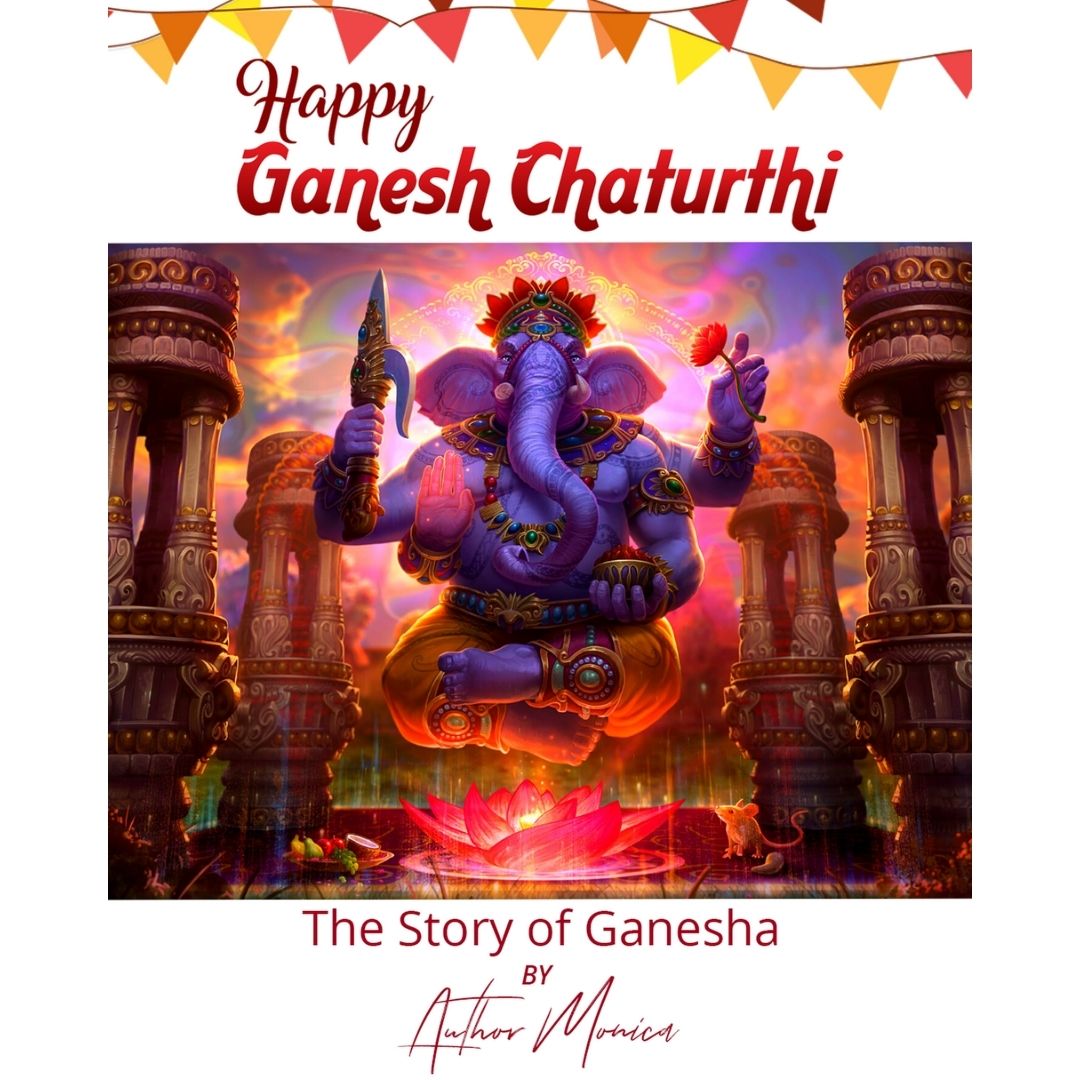
    ‘Vinayak Chaturthi’ or ‘Ganesh Chaturthi’ is celebrated on the fourth phase of the moon in the Bhadrapada month of the Hindu calendar. It marks the birth of God Ganesha, the younger of the two sons of Shiva and Parvati.

    THE STORY OF GANESHA’S BIRTH

    There is an interesting tale behind the birth of Ganesha. It’s a story of faith, of dutifulness. Once Mata Parvati wanted to bathe in a water body inside a cave, but the mouth of the cave was unguarded so she needed someone, someone her own, reliable to watch over the opening. To do so she collected some clay from the cave and moulded a sculptor of a boy. She then placed both her palms on it and with complete faith uttered words in its ears. Words, filled with feelings of belief and faith.

    “You are my son! I have created you with my will and I give you my acceptance as a son. Please guard this entrance of the cave. Do not allow one to enter.”

    Saying so, she went inside. Her words of belief and faith personified the sculptor and it turned into a son. Lord Shiva who was away at Mount Kailash meditating arrived at the cave to meet his wife Mata Parvati. He didn’t notice the tiny sculpted boy and stepped forward to enter the cave. The boy stopped him,

    “Stop! You are not allowed to go inside. My mother is bathing and has asked not to permit anyone’s entry. So stay right where you are!”

    Shiva was angered, firstly for having been stopped to see his wife and secondly for this boy announcing himself as Parvati’s son. With no further thought, he axed the boy’s head. Just then, Parvati emerged hearing the chaos. She was devastated to see her beheaded son. She narrated the whole story to Shiva with tears of anger. Lord Shiva immediately repented upon his short temper and instructed his Ganas (attendants) to fetch a head. Since they were in a forest, the Ganas found a dying elephant, seeking the animal’s permission they took its head. Shiva like Parvati, with utmost faith and words of acceptance, placed the head on his body and spoke,

    “I wholehearted take you as my son and name you Ganesha, the elephant-headed. I bestow you with qualities of unsurpassable wisdom and sturdy temperament. You shall be summoned by devotees at the onset of new ventures and initiatives. Your presence shall keep the patrons reminded of your qualities, of how steadfastness and perseverance are helpful to clear the vighans (challenges) that fall on the path of action.”

    In this manner, Lord Shiva and Mata Parvati birthed Lord Ganapati. Since then Lord Ganesh is worshipped before all Gods at the initiation of any enterprise.

    SYMBOLISM

    Lord Ganesh is portrayed as holding a sweet, a ladoo or modak, symbolic of the blessing of sweetness and affluence in life, the other hand is showing a palm, symbolic of reassurance that everything will eventually come to you. In another, he holds a lotus, representing Mother Nature and in the fourth holding his broken tusk symbolic of a weapon to pierce and dig into the problem. His vaahan is a rat, yet again symbolic of problem-solving ability. Just as a rat although not fast and ferocious is acclaimed for chipping away the problem by biting it away rigorously. The rat is also able to reach deep down into the ground and can reach high up the mountains. Considered as people’s God, he is aptly called ‘Ganesha’.

    -Monica Gupta
    Image Credits : andantonius

  • THE HISTORICAL SIGNIFICANCE BEHIND RAKSHA BANDHAN

    THE HISTORICAL SIGNIFICANCE BEHIND RAKSHA BANDHAN

    “Treat me as a king would treat another king.”

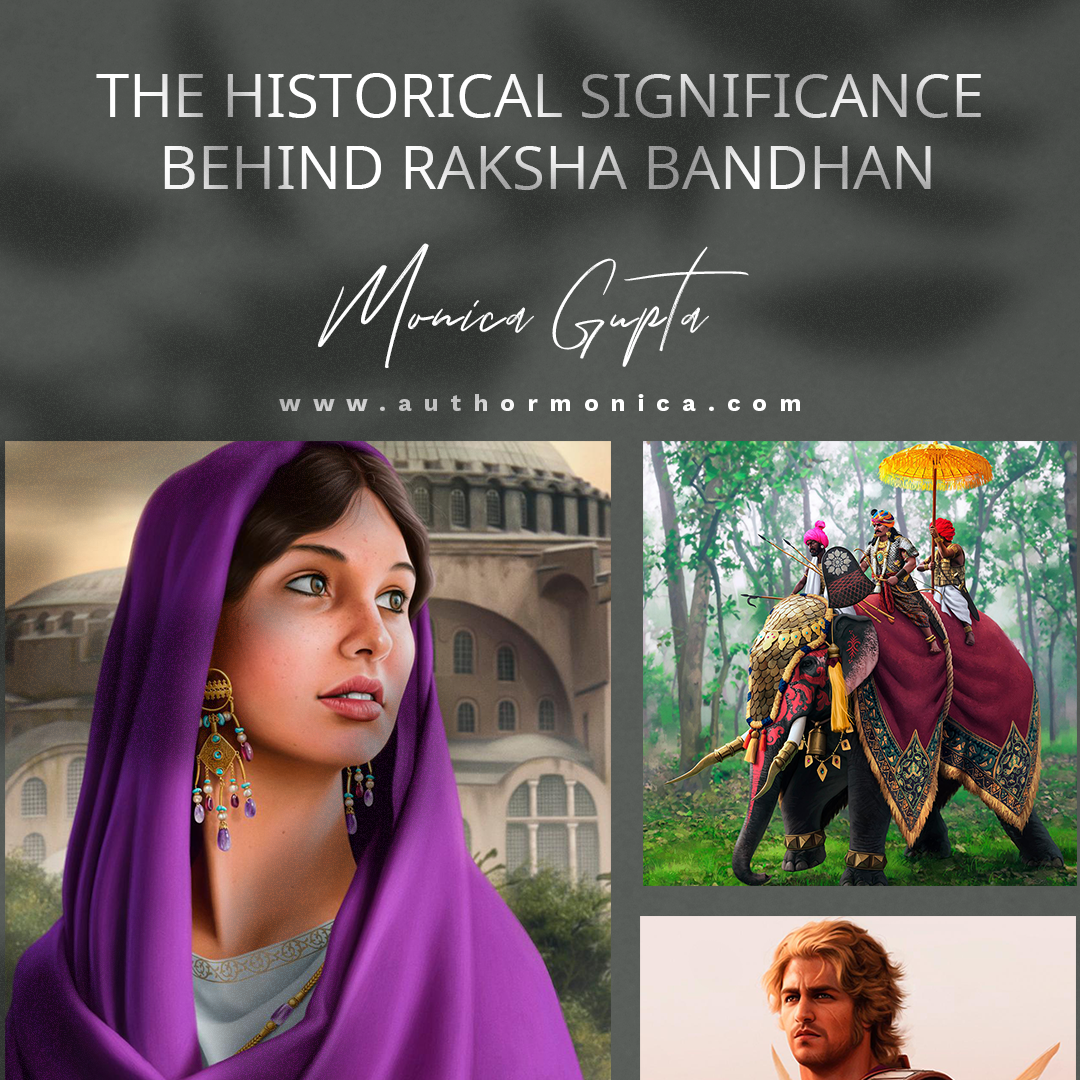
    Emperor Porus of Purava kingdom spoke with pride as his hands and legs were chained but the head held high. He walked towards King Alexander of Macedonia, as a surrenderer, after giving him a tough fight, in the battle of Hydaspes (on the bank of river Jhelum, now in Punjab Pakistan) in 326 BC.

    Alexander was on a winning Speer since the age of 20 yrs., individually expanding his territories and winning the glorious name as Alexander the Great. After establishing the Great Greek Empire in the west, he marched towards the Indian Sub-continent. For expansion in East, he had to cross the monsoon swollen rivers of Jhelum and Beas rivers that lay under the surveillance of King Porus, the Greek name for King Purshottam of Purvana Kingdom. On the first day of battle, Alexander who had under-estimated the Porus army was overwhelmed and astonished to witness their number and the outstanding skills and strength of the soldiers. The sight of Porus at warfare was another amazement. Seated atop the mighty elephant he butchered every enemy that crossed his path. Porus was wreaking havoc on the opponent army. Alexander admired his valour, as he observed his every attack and defence. On the first day itself, Alexander lost hundreds of his soldiers and suffered heavy artillery loss. Roxana, wife of Alexander has accompanied him during that time. When she heard of Porus’s army and their outstanding defence and fighting skills she became fearful. She felt as if something would happen to Alexander. She was acknowledged with Indian traditions and thus decided to meet Porus in person. She sent a messenger seeking a private meeting with him. Porus didn’t smell any foul play so nodded to the meeting.

    Roxana took along a red and orange coloured thread. She walked towards king Porus with her head covered with a drape and tied the thread on his right wrist.

    “This makes me your sister and you, my brother. I know about the Indian Tradition of Raksha Bandhan. This thread shall keep you reminded of me, of your now sister!”

    Saying so she walked out of his tent and returned to her side of the camp. The next day again both the forces met and arrayed themselves for the battle. Coincidently, Porus and Alexander came face to face against each other, one to one in a sword duel. Two kingly sword clang thunderously. Every blow was received and returned with mightier strength. Alexander lost his stamina, as a result, he tripped and fell to the ground as his sword fell away. Porus now stood towering above him, his sword pointed just inches away from his throat. The armies froze. Porus raised his sword to stab Alexander, but as he raised his hand the red thread on his wrist appeared before his eyes. He recalled Roxana’s words, and his sword stabbed the ground beside Alexander. Porus spared him his life, uttering, “We are people of words. We keep our promises!” Alexander was baffled by Porus’s action. In the evening when he shared the happenstance with Roxana, she revealed to him with teary eyes about the amulet she had tied to Porus as a sign of bother sister bond.

    The battle continued for days. King Porus lost the battle against the mighty army of Alexander the Great, but his defence against him has been written as a masterpiece in history. His surrender was honoured by King Alexander as he appointed him as the governor of the land. Hence, Porus retained his land and Alexander marched ahead to invade others.

    Although not much has been mentioned about this event in many history books. The tradition of Raksha Bandhan, as a bond of protection between the brother and sister trails back to 356 BC.

    Written By : Monica Gupta

    Image Credit : JFoliveras

  • The Long-distance Marriage Of Bheem And Hidimba

    The Long-distance Marriage Of Bheem And Hidimba

    When Hidimba saw Bheem, it was love at first sight. But how and when did Bheem marry Hidimba? The fabled love story between a warrior and a demoness features in the Mahabharat right after the Lakshagriha incident. The Pandavas, along with their mother Kunti, were spending their days in a forest where the demon Hidimb attacked them one night. Bheem put up a brave fight, and with a little help from Hidimba managed to kill the demon. His courage and strength instantly attracted the demoness to Bheem.

    An Unconventional Bond Between Bheem And Hidimba

    Bheem and Hidimba were married soon after this incident and the alliance had the approval of the Pandavas. Thus, Hidimba became the first daughter-in-law of Kunti and Pandu vansh. Comparatively, Dwapar Yug was more liberal and less stereotyped. Hidimba unhesitant, expressed her desire to marry Bheem.

    To win his trust, and to assure him of her love and intentions, she even helped Bheem protect his family from her demon brother Hidimb.

    With her guidance, he was able to kill him. Convinced about her feelings, Kunti and the Pandavas blessed their marriage. The unconventional wedlock was approved with a few conditions – that the demoness will not join the clan back in Indraprast but stay back at the Kamyaka forest. She would neither stake her claim as the queen nor would her offspring be liable as an heir to the throne.

    A long-distance marriage

    Hidimba knew she would never enjoy a conventional married life, living under the same roof with her husband. But all she wanted was Bheem’s love, and so she agreed to the conditions. Like the contemporary times, though inconvenient, long-distance marriages existed and thrived centuries back too.

    Why Bheem left Hidimba?

    The romantic honeymoon period of their marriage lasted only for a year. Having seen the face of his son Ghatotkach, Bheem announced it was time for them to part. The time had come for the Pandavas to carry on with their journey and that’s why Bheem left Hidimba.

    With a heavy heart, Hidimba and Bheem promised to love each other until the end. Hidimba stayed back to raise a worthy son and take care of the forest and people of Kamyaka whereas Bheem, along with his brothers, embarked on the journey to win back their honor and empire.

    Making a long-distance marriage stand the test of time

    So how did this long-distance marriage manage to survive the test of time and circumstances? Hidimba was a demoness blessed with supernatural powers. Every once in a while, when Bheem was reachable, she would fly to him. And together they would go off to far lands. She would carry him to celestial places.

    They would fill their hearts with memories.

    During their time together, Bheem would assure her of his love. In the truest words, he meant when he said, “You are my first wedded wife. Your place shall always be special. It can never be replaced.” And Hidimba would believe every word he spoke.

    Bheem and Hidimba’s son strengthened their bond

    During their exile years, Bheem visited the Kamyaka forest and stayed for days. This was the only opportunity for Bheem and Hidimba’s son, Ghatotkach, had to bond with his father, uncles and grandmother. “Will you teach how to master the mace, father?” he’d ask and Bheem would proudly comply.

    Ghatotkach was a combined dream that Bheem and Hidimba lived and shared. He was a symbol of their love.

    Bheem often praised her, “You are a very diligent and loving mother. I can see our son is strong and responsible. Now, begin his training in warfare skills. When I return to Indraprast, I will train him in mace fight. It shall be a proud moment when he defeats me.”

    Hidimba would lovingly, follow his guidelines and raise their son in the manner befitting a prince.

    A hint of jealousy

    When Bheem married Draupadi, and visited Hidimba along with her, the emotions of jealousy and insecurity were natural. She lamented and spewed anger.

    “Is your love for me over now? She is very beautiful. Your rightful queen!”

    And empathetic Bheem reassured her, “There can’t be any comparisons my dear. She has her place, and you yours. Love doesn’t end like this. And you were aware of the unconventional nature of our marriage right from the beginning. Besides, you already are the queen of Kamyaka. You do not need me to make you a queen. You are far more superior. Isn’t it?”

    Eased by his words, Hidimba settled down. She reminded herself to focus on their love and son, and not get affected by her husband’s relationships outside of their nuptial bond. Bheem and Hidimba made their long-distance marriage work, thanks to their strong faith in each other.

    Whenever they were haunted by doubts, they reassured and reminded themselves of the conditions they had discussed before getting into the wedlock. Like a mature couple, they gave each other liberty to practice and seek their individual goals yet come together when life allowed them to, particularly in raising their son, Ghatotkach. With faith and trust as the cornerstones, their long-distance marriage stood the test of time.

    The Concept of Long Distance Marriages Endures

    This wedded setup is quite common in contemporary society as well. Couples live in separate homes and different cities. Married, yet living separately to fulfil their individual goals and purposes. They are united, merged with love yet they balance their individual goals and support each other’s as well.

    Unlike the couples living under the same roof, those in a long-distance marriage meet at intervals and still pick up from where they had left. Distance doesn’t mar their feelings or affect the bonding. Together they find ways to keep in touch, keep the spark alive and above all learn to ward off temptations of straying.

    Even though they don’t have their partner by their side all the time, they don’t let distance weaken their relationship.

    They learn to manage their insecurity, and at times suspicions. In those times, a demoness relied on her supernatural powers to reach her beloved, today couples use technology to stay connected. The virtual world keeps them close, if not tangibly at least emotionally.

  • Birth of Legendary Veda Vyasa Through A One-Time Stand

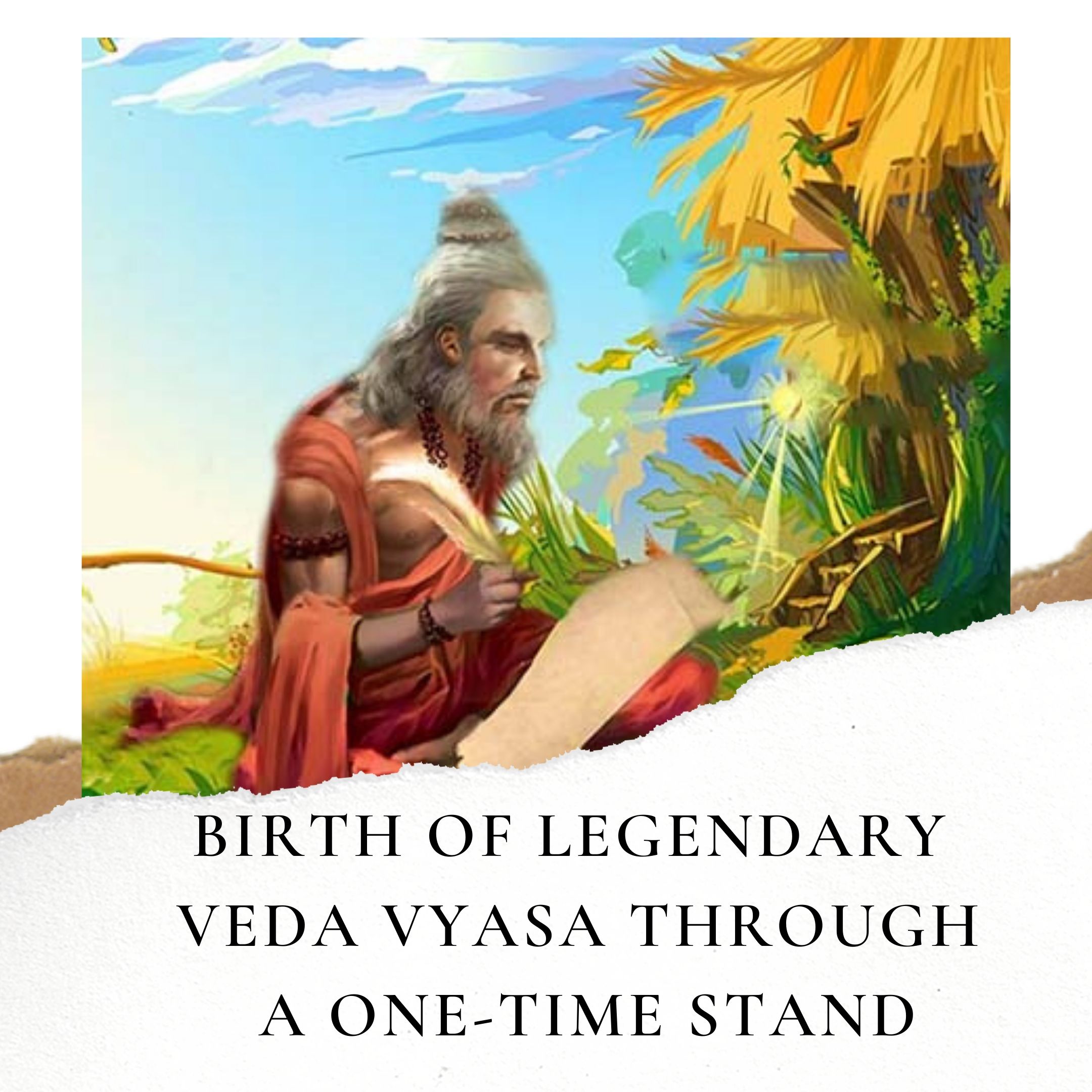
    Birth of Legendary Veda Vyasa Through A One-Time Stand

    Vyas, also known as Veda Vyasa, is the legendary author of the world’s bulkiest epic Mahabharata as well as the ancient Vedas and Puranas. He is a well-known mythical figure. The Chiranjivi (immortal) sage whose birthday is celebrated as the festival of Guru Purnima. But not many know the answers to pertinent questions about Veda Vyasa history – When was Veda Vyasa born?, Who is Veda Vyasa in Mahabharata?, and Who are the parents of Rishi Vyasa? – to name a few. Let’s explore the tale of Veda Vyasa birth to find out: 

    The Legend of Veda Vyasa Birth

    The Legend of Veda Vyasa Birth
    Veda Vyasa Birth Image Source

    Vyas is believed to be an expansion of Lord Vishnu, one of the trinity. He was created when Vishnu for the first time uttered the syllable ‘Bhu’. He is also considered immortal, as he wasn’t birthed. Vyas came to earth during the Dwapar Yug and bestowed with the duty to convert all Vedas and Puranas from oral to written versions. Besides having written the epic, he played a pivotal role in Mahabharata.

    Tracing the legend of Veda Vyasa’s birth, one uncovers that the relationship between his parents is unconventional and objectionable, even by the moral standards of the modern world. So, who are the parents of Rishi Vyasa? He is the son Satyavati and Rishi Parashar – a fisherwoman and a wandering sage.

    A sage in grips of attraction

    One day, Sage Parashar was in a rush to reach a place to perform a yagna. River Yamuna fell on his path. He spotted a ferry and requested to be dropped across to the bank. As Parashar sat in the boat and breathed a sigh of relief, his eyes fell on the woman ferrying the boat. In the backdrop of dawn, the beauty of this fisherwoman named Satyavati left him awestruck. In the early morning breeze, her curly locks danced on her face, even as her delicate arms moved in a circular motion, rowing the paddles.

    Enticed by her beauty, Parashar felt a strong surge of attraction rise within him. He recalled the blessing of Shiva: ‘you shall be the father of a meritorious son’. 

    Parashar knew it was the right time for him to become one. He expressed the desire for copulation to Satyavati. Having come of age, Satyavati too found herself in the grip of carnal urges. But she was in a dilemma, for the repercussions of the act would last a lifetime. But if she denied the sage, he could angrily topple the boat or curse her with an ill prophecy. 

    A young woman riddled with doubt

    She spoke hesitantly, “Oh, Great Munivar! I am a fisherwoman. I smell of fish (Matsyagandha). How will you bear my body odour?” Without a further word, Parashar blessed her with a boon of musk-smelling (Kasturi-Gandhi) body. Unable to hold himself, he shifted next to her. She retreated, sighting other doubts:

    “A baby outside the wedlock will cast aspersion on my purity.”

    Also looking around at the open river and sky, she retreated further.

    “Anyone can see us out here in the open. It can invite trouble for us, and me more than you.” 

    Vyasa is born

    Quickly rowing to the nearest bank, Parashar built a bushy hideout, removed from the village area. He also promised her that her virginity would remain intact after the act. Assured by the sage and his divine powers, Satyavati birthed him a son in the bushy hide-out without anyone’s knowledge.

    The boy was born with divine genes of Rishi Vashishtha, his great grandfather, and so Parashar named him Vyas

    Who is Veda Vyasa in Mahabharata?

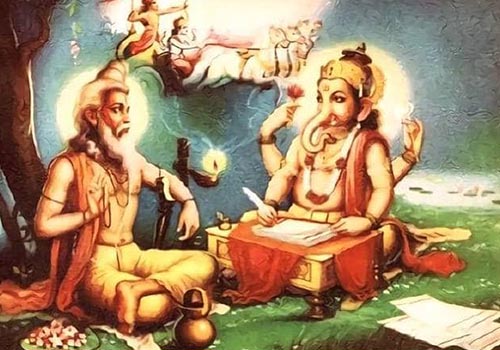
    Veda Vyasa in Mahabharata Image Source

    Parashar took Vyas with him and promised Satyavati that when needed, her son will come to her aid. Parashar washed himself and his memories of Satyavati in the river Yamuna. He left with Vyas and never met Satyavati again. 

    Even Satyawati returned to her community and never spoke about the incident. She kept this secret even from King Shantanu, her future husband. No one knew of it, until when she shared it with Bhishma on becoming the Rajmata of Hastinapur.

    Veda Vyasa gives Hastinapur its heir

    Satyavati married King Shantanu and bore him two sons, Vichitravirya and Chitrangada. Shantanu’s death and Bhishma’s promise to not to ascend on the throne of Hastinapur, led to the coronation of her sons. Satyavati became a Rajmata. Her sons married while Bhishma adhered to the oath of celibacy. Hastinapur prospered under Vichitravirya’s rein.

    But as destiny would have it, both Vichitravirya and Chitrangada died of illness without giving Hastinapur an heir to the throne.

    The throne lay vacant, inviting other empires to attack and usurp their kingdom. Desperate for a way out of impending doom, she remembered her son, Vyas. She had heard of him as a renowned seer, a powerful personality with divine powers and intellect.

    She confided in Bhishma and shared the truth about how and when was Veda Vyasa born. With Bhishma’s help, she arranged for the widowed queens, Ambalika and Ambika, to procreate with Vyas for the sake of an heir. 

    On the request of his mother, Vyas fathered Dhritrashtra and Pandu, the future kings of Hastinapur, along with Vidura – who was born to the queens’ lady-in-waiting and grew up to be an astute scholar and advisor to the kings.

    Is Veda Vyasa Still Alive?

    Veda Vyasa was created and not born, so he is considered immortal. He resides in the Himalayas, as per our mythological accounts. According to Srimad Bhagavatam, Veda Vyasa lives in a mystical place called Kalapa Grama. At the end of Kaliyuga, he will fulfil his destiny to revive the Surya dynasty by producing a son.

    Veda Vyasa Birth – A Story That Resonates Even Today

    Society still considers flings like the one between Satyavati and Rishi Parashar immoral. They are secrets that are let out as confessions with anonymous names and faces. We may live in a different yug but a child born outside the wedlock is still called a mistake. Such conceptions are terminated in the womb itself more often than not. Even if they are birthed, they live with baggage of social taboo.