Tag: Mahabharata

  • Birth of Legendary Veda Vyasa Through A One-Time Stand

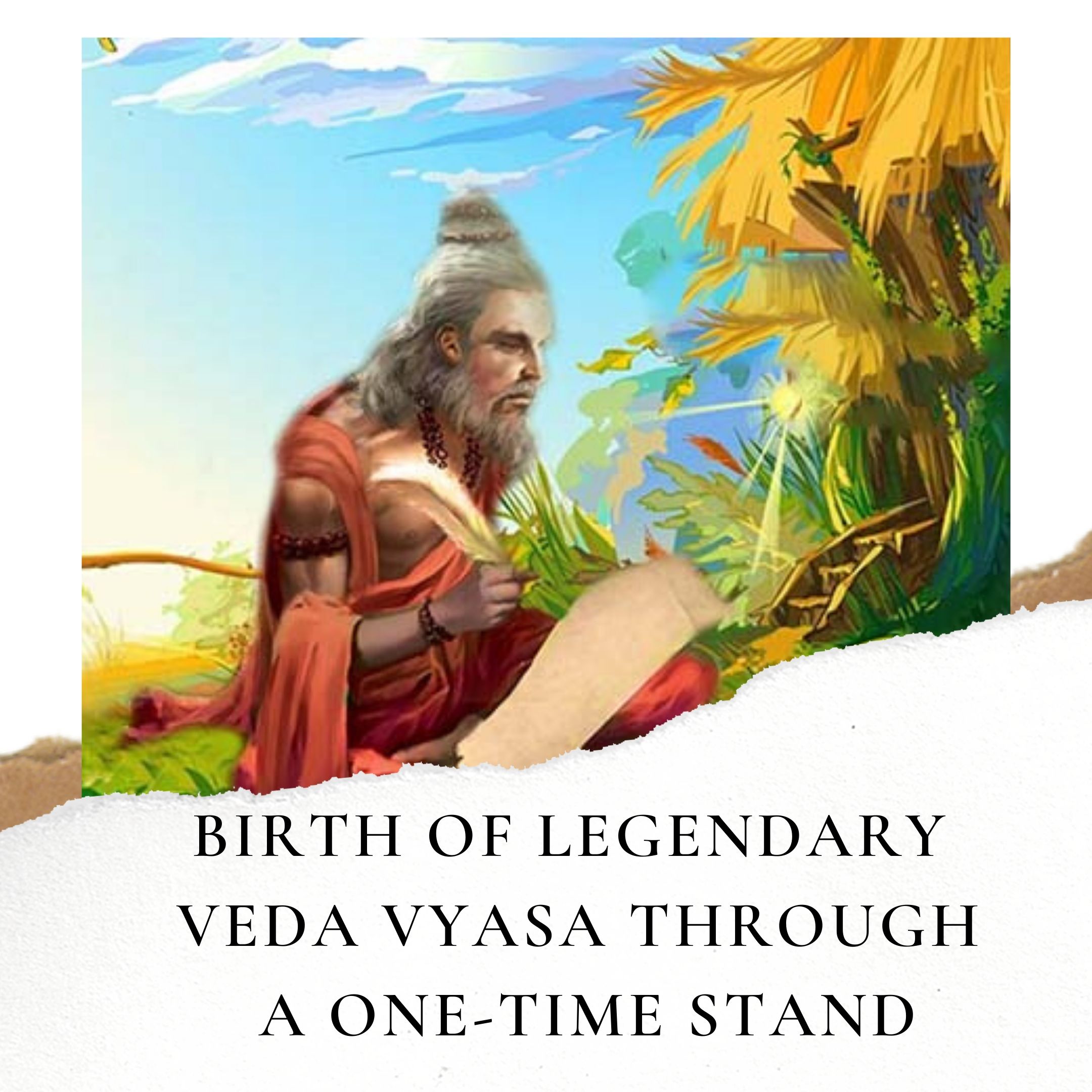
    Birth of Legendary Veda Vyasa Through A One-Time Stand

    Vyas, also known as Veda Vyasa, is the legendary author of the world’s bulkiest epic Mahabharata as well as the ancient Vedas and Puranas. He is a well-known mythical figure. The Chiranjivi (immortal) sage whose birthday is celebrated as the festival of Guru Purnima. But not many know the answers to pertinent questions about Veda Vyasa history – When was Veda Vyasa born?, Who is Veda Vyasa in Mahabharata?, and Who are the parents of Rishi Vyasa? – to name a few. Let’s explore the tale of Veda Vyasa birth to find out: 

    The Legend of Veda Vyasa Birth
    The Legend of Veda Vyasa Birth
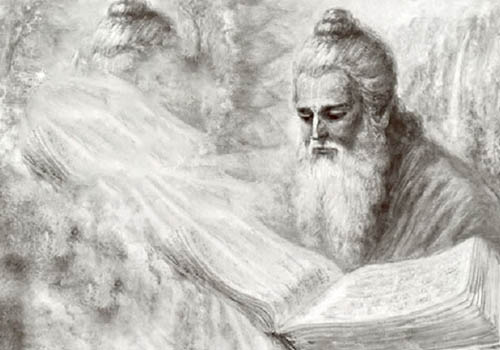
    Veda Vyasa Birth Image Source

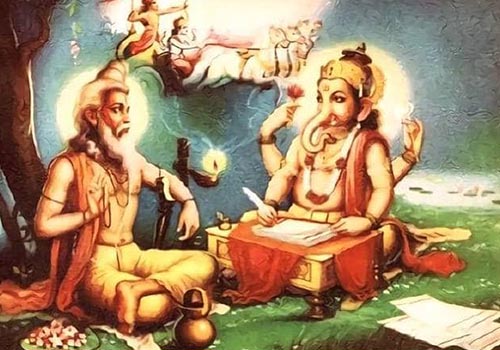
    Vyas is believed to be an expansion of Lord Vishnu, one of the trinity. He was created when Vishnu for the first time uttered the syllable ‘Bhu’. He is also considered immortal, as he wasn’t birthed. Vyas came to earth during the Dwapar Yug and bestowed with the duty to convert all Vedas and Puranas from oral to written versions. Besides having written the epic, he played a pivotal role in Mahabharata.

    Tracing the legend of Veda Vyasa’s birth, one uncovers that the relationship between his parents is unconventional and objectionable, even by the moral standards of the modern world. So, who are the parents of Rishi Vyasa? He is the son Satyavati and Rishi Parashar – a fisherwoman and a wandering sage.

    A sage in grips of attraction

    One day, Sage Parashar was in a rush to reach a place to perform a yagna. River Yamuna fell on his path. He spotted a ferry and requested to be dropped across to the bank. As Parashar sat in the boat and breathed a sigh of relief, his eyes fell on the woman ferrying the boat. In the backdrop of dawn, the beauty of this fisherwoman named Satyavati left him awestruck. In the early morning breeze, her curly locks danced on her face, even as her delicate arms moved in a circular motion, rowing the paddles.

    Enticed by her beauty, Parashar felt a strong surge of attraction rise within him. He recalled the blessing of Shiva: ‘you shall be the father of a meritorious son’. 

    Parashar knew it was the right time for him to become one. He expressed the desire for copulation to Satyavati. Having come of age, Satyavati too found herself in the grip of carnal urges. But she was in a dilemma, for the repercussions of the act would last a lifetime. But if she denied the sage, he could angrily topple the boat or curse her with an ill prophecy. 

    A young woman riddled with doubt

    She spoke hesitantly, “Oh, Great Munivar! I am a fisherwoman. I smell of fish (Matsyagandha). How will you bear my body odour?” Without a further word, Parashar blessed her with a boon of musk-smelling (Kasturi-Gandhi) body. Unable to hold himself, he shifted next to her. She retreated, sighting other doubts:

    “A baby outside the wedlock will cast aspersion on my purity.”

    Also looking around at the open river and sky, she retreated further.

    “Anyone can see us out here in the open. It can invite trouble for us, and me more than you.” 

    Vyasa is born

    Quickly rowing to the nearest bank, Parashar built a bushy hideout, removed from the village area. He also promised her that her virginity would remain intact after the act. Assured by the sage and his divine powers, Satyavati birthed him a son in the bushy hide-out without anyone’s knowledge.

    The boy was born with divine genes of Rishi Vashishtha, his great grandfather, and so Parashar named him Vyas

    Who is Veda Vyasa in Mahabharata?

    Veda Vyasa in Mahabharata Image Source

    Parashar took Vyas with him and promised Satyavati that when needed, her son will come to her aid. Parashar washed himself and his memories of Satyavati in the river Yamuna. He left with Vyas and never met Satyavati again. 

    Even Satyawati returned to her community and never spoke about the incident. She kept this secret even from King Shantanu, her future husband. No one knew of it, until when she shared it with Bhishma on becoming the Rajmata of Hastinapur.

    Veda Vyasa gives Hastinapur its heir

    Satyavati married King Shantanu and bore him two sons, Vichitravirya and Chitrangada. Shantanu’s death and Bhishma’s promise to not to ascend on the throne of Hastinapur, led to the coronation of her sons. Satyavati became a Rajmata. Her sons married while Bhishma adhered to the oath of celibacy. Hastinapur prospered under Vichitravirya’s rein.

    But as destiny would have it, both Vichitravirya and Chitrangada died of illness without giving Hastinapur an heir to the throne.

    The throne lay vacant, inviting other empires to attack and usurp their kingdom. Desperate for a way out of impending doom, she remembered her son, Vyas. She had heard of him as a renowned seer, a powerful personality with divine powers and intellect.

    She confided in Bhishma and shared the truth about how and when was Veda Vyasa born. With Bhishma’s help, she arranged for the widowed queens, Ambalika and Ambika, to procreate with Vyas for the sake of an heir. 

    On the request of his mother, Vyas fathered Dhritrashtra and Pandu, the future kings of Hastinapur, along with Vidura – who was born to the queens’ lady-in-waiting and grew up to be an astute scholar and advisor to the kings.

    Is Veda Vyasa Still Alive?

    Veda Vyasa was created and not born, so he is considered immortal. He resides in the Himalayas, as per our mythological accounts. According to Srimad Bhagavatam, Veda Vyasa lives in a mystical place called Kalapa Grama. At the end of Kaliyuga, he will fulfil his destiny to revive the Surya dynasty by producing a son.

    Veda Vyasa Birth – A Story That Resonates Even Today

    Society still considers flings like the one between Satyavati and Rishi Parashar immoral. They are secrets that are let out as confessions with anonymous names and faces. We may live in a different yug but a child born outside the wedlock is still called a mistake. Such conceptions are terminated in the womb itself more often than not. Even if they are birthed, they live with baggage of social taboo. 
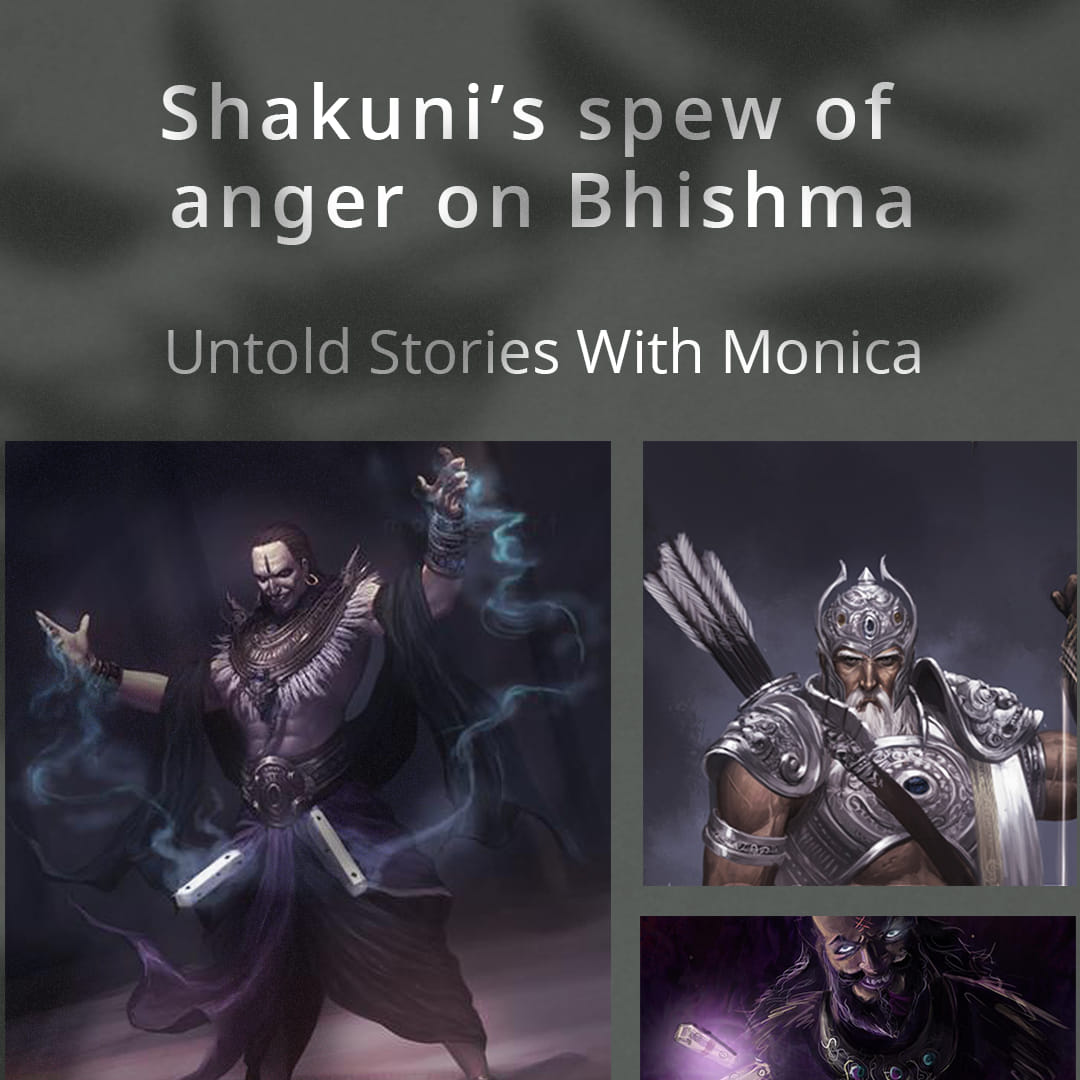
  • Shakuni’s spew of anger on Bhishma

    Shakuni’s spew of anger on Bhishma

    Shakuni circled around Bhishma at a slow pace. Bhishma lay almost lifeless on his death bed of arrows. Without any tinge of mercy or pity in his heart, Shakuni grinned victoriously, while looking deep into Bhishma’s half-open eyes.

    “Your eyes look tired, Pitamaha. Let me help you visualise the war scenario. The Kuru flag is unable to furl in the winds. It’s drooping and may soon fall off the pole. And you know what that means? It means my vengeance will be soon avenged,” Shakuni taunted.

    “Why do you hate Hastinapur so much? Your sister is the queen of the empire. Your favourite nephew, Duryodhan, the King. You seem to be celebrating this defeat, why?”  Bhishma asked gruffly.

    Shakuni snorted with a laugh,

    “Do you recall, Bhishma, the days when you usurped lands, my land, Gandhar, under the pretext of establishing Dharma there? Manifesting your greed to spread the territories of Hastinapur. Do you recall how my family died of hunger in prison? No, you don’t. For you weren’t there to see it. Every single grain of rice that was served to my near and dear ones, they fed me. So I could live and fight back when the winds were favourable. The insult you inflicted on my loving sister, Gandhari. You left no choice for my father, but to hand over his beautiful daughter to a blind man. You used your power to win girls for the kings of Hastinapur. My loving sister’s life became miserable with darkness beside a handicapped man. And who is responsible for all this? You, Yes you Pitamaha!”

    Disturbed by the recall of past, Bhishma shook his head in distress. As if accepting the flaws of his decisions and actions, he pleaded,

    “If you see me as your culprit, why punish Hastinapur? You could have killed me or brought me down? Why such a major plotting against the entire Kuru clan?”

    Shakuni laughed,

    “Who are you and what are you if not Hastinapur? What identity you built for yourself other than this kingdom. Hastinapur is nothing but a personification of you. It is a manifestation of your thoughts and actions. Though you vowed not to sit on the throne, you didn’t allow anyone to grow on it. You ruled everyone’s life in Hastinapur. You were so blinded with love for it that you assumed it was solely upon you to see the empire flourish. To extend its boundaries you killed kings, you abducted girls to serve to Kuru handicapped heirs to carry forward their lineage. So my choice to bring down the Kuru vansh is reasonable, isn’t it? Because to bring about Hastinapur’s doom is to bring down the supreme Devavrata, the indelible Bhishma!”

    “And to do so, you used your sister and her off springs. Do you feel no guilt as a maternal uncle? For poisoning the tender heart of Duryodhan ever since his birth,” mocked Bhishma.

    “Guilty? It’s not guilt but pride that I feel. If history will write you as Bhishma for the oath of celibacy you practiced, it will write me as the most crafted and intelligent man. The personification of Dwapar Yug. You used your arms and manpower to uphold Hastinapur and justified your actions in the name of Dharma. I used my cult practices, my political craftsmanship, my devious planning to bring down who erred me and my loved ones. History will show that the weak can rise. If not arms and power, there is much driving force in the revenge, fueled by the mind. And as per the guilt factor? It’s my love for my sister that kept the fire kindled. Every time I saw her blindfold beside a blind man, my blood boiled and mind ignited with anger. As per Duryodhan, I do feel sorry. But I needed a pawn, and I chose him.”

    Wiping the tears from Bhishma’s eyes, Shakuni whispered,

    “Lie on these arrows, Pitamaha, and ponder – was it me who crafted this war or was it you, your blinded love for Hastinapur that led to it? Was it the repercussions of your actions based on excessive greed for Hastinapur’s prosperity?”

    Shakuni spewed his anger and walked away, and Bhishma was left experiencing more pain from arrows of guilt left by him than the arrows that lay under him.

  • Bhanumati shares her heart with Lakshmana (Daughter)

    Bhanumati shares her heart with Lakshmana (Daughter)

    From the squint of her eye, Bhanumati could see through Lakshmana’s heart. She bore much resemblance to her father, Duryodhan. Just like him, her gait spoke of her emotional state. Holding her wrist, and running a loving palm on her cheeks, she asked,

    “What thought is keeping my daughter so occupied that she doesn’t even see her mother in the chamber?”

    Lakshmana’s eyes ran over Bhanumati’s face. Devoid of adorations, pristine and white. She lowered her eyes, feeling the pang of the void that the death of her father had left in their heart.

    “Maa! Life has been very difficult for you and it still is.” empathized Lakshmana.

    Faking a smile Bhanumati asked,

    “What makes you say that?”

    “Maa, the world saw my father, Duryodhan, as a villain. The history of Hastinapur and Mahabharata writes him as an antagonist, adharmic. His death is grieved less and more joyed. It must have affected you, right?”

    “Yes, it did! It did for a while. It affected the queen of Hastinapur, not his wife. He was an Adharmi in the eyes of the moralists. He was a villain in the eyes of his enemies. He was an antagonist for those with whom his ideologies were in a clash. History writes him only through the ink of his political career, his defeat and his misdeeds.”

    “And how do you see him, mother?” Lakshmana prompted.

    “I see him through the eyes of a wife. He was the most loving man. A man with tough shoulders and a soft heart. When he had forcefully abducted me from the Swayambar, I was furious and hated him to the core. But when he politely bared his heart, expressing his love for me at first sight, when he had reasoned that my abduction was the only resort left to him and that he didn’t want to lose me to anyone, I was able to see his intentions and not judge his actions. He married me only after winning my love. He had wooed me for days, had won my trust and promised to be a one-woman man all life. And he did too. He was a gentleman, true to his love and soul.”

    “You call him a gentleman, even though he called Mata Draupadi names and mistreated her publicly in vulgar ways?”

    “Yes, I was angry, very angry. I had lashed at him for doing this to a woman. My blood had boiled. But he had sternly reasoned that it was a political move, an act of vengeance against her mocking and bullying him, calling him a blind man’s son. A repercussion Draupadi faced for using her tongue loosely.”

    Bhanumati continued,

    “Lakshmana, however, the history might portray him, but to me, his wife, he will always be a hero, the victorious king of my heart. Although the world saw him as an egoist, I knew that his ego was a defense against the unfair world. Also, your father was merely a pawn in the hands of his maternal uncle Shakuni, who harbored grievances against Hastinapur and Pitamaha Bhishma and used your father to seek his revenge.”

    “Didn’t his short temper or reactive nature ever scare you and keep you edgy?” intrigued Lakshmana.

    “Initially it did. When I saw him behave like that with others, it feared me. But as years passed, I realized my fears were irrelevant. For he was never that to me or to the people he loved. I recall this incident. Once he was away at war for a few days. He had asked Karan to keep me company and take care of me. I and Karna were lost in playing a game of dice, I was on the losing side. So I was irritated and got up to leave for quits. But Karan grabbed my wrist to stop, asking to complete the game. In doing so my long pearl necklace, entangled in his hand and it broke, scattering the beads all over. At that instant, your father entered. I and Karna were taken aback. We felt Duryodhan may misunderstand and misjudge us. But to our surprise, he picked up all the pearls and joked, “Should I bead them too?” after that incident, my fears were gone. I had a glimpse of his heart that was filled with faith for his wife and his friend.”

    Seeing her father through the eyes of her mother, Lakshmana realized that a man can never be painted in just black or white, that there were reasons to justify his father’s actions. She hugged her mother tight. Her chest bloated with pride for her father. She walked out of her mother’s chamber with a light heart, as silent tears of love trickled down Bhanumati’s eye.

  • KARNA’S ARROWS OF QUESTIONS ON KUNTI

    Karna’s Arrows of Questions on Kunti.

    Karna pleaded in a broken and an acidic tone,

    “Tell me Rajmata Kunti, how do you have the right to call yourself my mother? Why should I see you as my Mata? What have you done so far to deserve this title?”

    Kunti collapsed on her knees, for she had no answers to this child’s questions. Although a grown up legendary warrior now, his questions were revealing a toddler….. His oddity was justified….. No words came out of her mouth. Only guilty tears flowed.

    He continued brashly,

    “Even Krishna was born out of Devaki and raised by Yashodhra. Yet he is addressed as Devaki Nandana. You know why? Not only because she held him in her womb for months but also because she let go of him for his safety, and not for her own protection. That is a courageous act, isn’t. But you, Pandu Jananni, were coward to accept me, and more coward to not kill me. Instead of discarding me away in the river, you should have killed me. At least my birth wouldn’t have been shamed. That death would have been better, than this life filled with dilemmas about my belonging and birth.”

    Kunti retorted,

    “YES! YES! I was a coward. I still am one. That is exactly the reason why I come to meet you in hiding even today. I accept your accusations Putra. But please for god sake, please come to me now. I am standing here with open arms to embrace you, ready to face all. I want to announce you as my first born, my eldest son.” Pleaded Kunti.

    “DON’T! PLEASE don’t call me your son. I am Radhey. Radha MA’s son. My heart is filled with memories of her. It was she who ran her fingers on my cheeks to wipe the tears. Those were the hands that ran on my forehead to sooth the creases of tensions. Her delicacies have built these muscles. And above all, those were her prayers which were filled with my name. It makes me wonder Rajmata, how do these tears flow from your eyes? Is your mind conditioned to evoke emotions when it hears the word Mata? Don’t fake it Rajmata. Motherhood isn’t an entitlement. It’s a journey to be lived and felt and above all to be shared. Without knowing the dharma of a mother, without performing any Karma of a mother, you want to be my Mata now. Please call me Karan, that’s my name for outsiders.” Karna shrugged her as a mother.

    “I was a young girl putra. I didn’t have the courage to face the world as a single, unwedded mother. It was my curiosity that led me to test Rishi Durwasa’s divine mantra. That I could summon any God with the Mantra jaap. I didn’t know what to do my child. I am sorry! I am really sorry!” Kunti sobbed.

    Hearing her reasons, Karna mocked,

    “So I am actually a result of an experiment. Right? Isn’t this too harsh to hear Rajmata? And now after years you want the entitlement to the result of that experiment. Standing at the threshold of Kurukshetra war, you suddenly want to accept me as a son. Isn’t this far from truth? Doesn’t this request display your love for your five sons and not me? Why are you here? To accept me as a son…..give me the throne of Indraprastha or to save your sons from being killed by my arrows…. Please go away Rajmata. This Daanvir Karna has nothing to offer you except the rain of his questions.”